
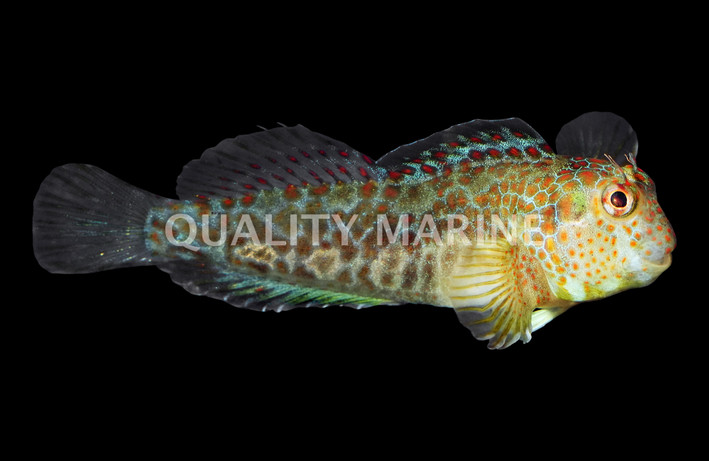
Tesselated Blenny should be added to well established aquariums with stable parameters and mature biofilm or microalgae growth. Plenty of live rock and structured rockwork should be provided for perching, hiding, and grazing throughout the day. Tesselated Blenny are generally considered peaceful; however, they may occasionally pick at very small benthic organisms or compete with other micro-grazers if natural food sources become limited. Provide a balanced diet consisting of small meaty foods such as finely chopped mysis shrimp, copepods, enriched brine shrimp, and prepared micro-pellets, supplemented with algae-based foods and natural film algae for dietary balance. This species should be housed with peaceful tankmates that allow the blenny to forage naturally without constant competition or aggression. Males may be slightly larger and may display more intense coloration, pattern contrast, or subtle cirri development compared to females, particularly during breeding or territorial displays. Like other small reef-associated blennies, they may show mild color shifts during social interactions. Most blennies lack or have very small swim bladders, so they will spend most of their time perched on rock surfaces, shells, or rubble zones, moving in short darting or hopping motions between cover. Be sure to provide an aquarium with a tight-fitting lid, as blennies may jump when startled. Tesselated Blenny is occasionally available in the aquarium trade and is appreciated for its active behavior and subtle, natural patterning. This species typically displays a light tan to brown base coloration with darker mottling, banding, or spotting that provides camouflage among rock, algae, and reef substrate. The head may feature small cirri typical of many combtooth-type blennies. Fins are generally translucent with faint spotting or edging depending on environment and mood. Tesselated Blenny typically grows to around 2.5–3.5 inches in length.
We recommend a minimum aquarium size of 20–30 gallons or larger for long term success, especially in reef aquariums with abundant rockwork, hiding crevices, and natural foraging surfaces.
Water conditions: Salinity 1.020 – 1.025, Temp (F) 72 – 78, pH 8.1 – 8.4, Alkalinity 8 – 12 dKH.
-
Care:
 Easy
Easy
-
Behavior:
Social
-
Diet:
Frozen Food
Live Food
-
Habitat:
Reef
-
Light:
Medium
 Easy
Easy
 Social
 Frozen Food
 Live Food
 Reef
Reef
 Medium