
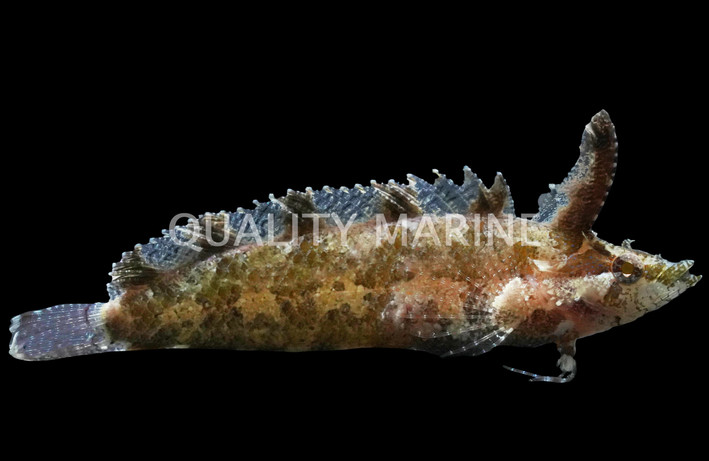
Rhino Blennies should be added to well established aquariums with stable parameters and mature algae growth. Plenty of live rock and structured rockwork should be provided for perching, hiding, and grazing throughout the day. Rhino Blennies are generally considered peaceful; however, they may occasionally pick at very small benthic organisms or compete with other algae grazers if natural food sources become limited. Provide a balanced diet consisting primarily of algae-based foods such as spirulina, marine algae sheets, and herbivore preparations, supplemented with small amounts of finely chopped meaty foods for optimal health and conditioning. This species should be housed with peaceful tankmates that allow the blenny to graze freely without constant competition or aggression. Males may be slightly larger and may display more pronounced head cirri or facial appendages compared to females. Like other combtooth blennies, they may show subtle shifts in coloration during social interactions or breeding behavior. Most blennies lack or have very small swim bladders, so they will spend most of their time perched on rock surfaces or moving in short hopping motions between grazing areas. Be sure to provide an aquarium with a tight-fitting lid, as blennies are known to jump when startled. The Rhino Blenny is sometimes referred to as a Rhinoceros Blenny and is occasionally available in the aquarium trade. This distinctive species typically displays mottled tan, brown, gray, or greenish coloration that provides excellent camouflage among rock and filamentous algae. The defining feature is the elongated, horn-like cirri above the eyes and on the head, giving the characteristic “rhino” appearance. Fins are usually translucent to lightly patterned and may change slightly depending on mood and environment. Rhino Blennies typically grow to around 3–4 inches in length. We recommend a minimum aquarium size of 30 gallons or larger for long term success, especially in reef aquariums with abundant grazing surfaces. Water conditions: Salinity 1.020 – 1.025, Temp (F) 72 – 78, pH 8.1 – 8.4, Alkalinity 8 – 12 dKH.
-
Care:
 Easy
Easy
-
Behavior:
Social
-
Diet:
Frozen Food
Live Food
-
Habitat:
Reef
-
Light:
Medium
 Easy
Easy
 Social
 Frozen Food
 Live Food
 Reef
Reef
 Medium