Was Tricolor Taken?
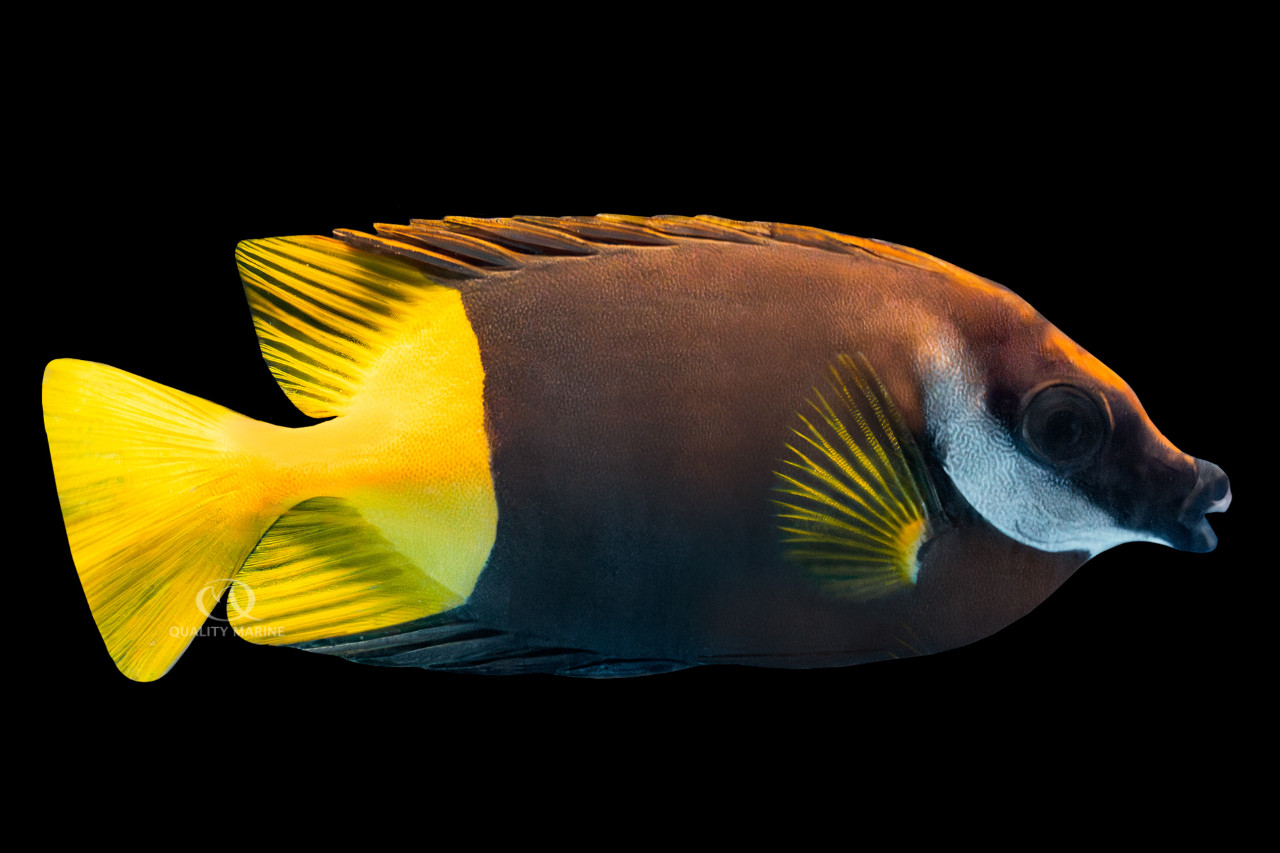
There is no perfect aquarium fi...
Wait, hold on. What about Bicolor Foxface Rabbitfish? You know, Siganus uspi?
Hmm, the case is strong here. Peaceful, useful herbivore, hardy, not too big, very active and striking colors... Okay, we'll accept the application and get back to you.
Where to start with these fish, first of all, they are not super well named. There are two dominant colors: black and yellow (go ahead, sing it, you know you want to) but there is also a big white dash behind their gill plate. Who knows, maybe the namers thought Tri-color Rabbit was going to be a bit too fancy. On the other hand, nothing mows down greens like a Rabbitfish, so on that front, the name is pretty accurate. Bicolors (yes, we have to stick with it) are among the smallest of the commonly seen Rabbitfish, and adults are rarely bigger than eight inches or so from tip to tail. The largest one on record is a tad over nine inches. They also are called Foxface, and this one also makes sense.
This means a pretty large aquarium, we suggest something in the 125 gallon and six-foot-long range, and more is always merrier when it comes to fish tanks. 125 is a glorious aquarium, but it's not so big that it isn't achievable for most of you at some point. This display should offer plenty of rocks for the BFR (Bicolor Foxface Rabbitfish) to swim through, graze on and hide within. They don't care if there is sand or not and not having any gives them one more surface to graze from. They'll do just fine with reef style lighting but might need to be acclimated to full intensity over a few days.
Often when lighting is too bright initially, you'll get to see one of the Rabbit's neatest tricks; when Rabbitfish are stressed, or want to hide, they can change their color, nearly immediately and very dramatically. They'll go from being just brilliant and bold, to nearly perfectly camouflaged. It's neat, but it’s also a sign you need to give them some space. BFRs are super hardy and are not picky about water chemistry; the parameters you're keeping everything else in your aquarium at will be just fine with the Bicolor too, just keep it stable. They will show their best color and be the most active in good, consistent water quality. Keep the water changes up and use quality salt like Tropic Marin (if we run our whole system on it, you can trust it too).
When Rabbitfish are small, they do best in groups; having three to five of them will help the fish acclimate and be more active more quickly. As they age, they'll be less tolerant of each other unless you're lucky enough to get a pair to form. With all that on the table, unless you have a couple hundred gallons of aquarium or more, you should probably stick to one Rabbitfish. They will be just fine, even when small as long as they don't get picked on all the time (which is rare.) They also don't seem to really care about other fish, and most fish don't really bother the Rabbits either (more on this in a moment). We've seen / had displays where Bicolor Rabbitfish were paired with just about everything under the sun: Gobies, Wrasses, Lionfish, Anthias, Eels, even Tangs, you name it.
We've also been keeping them in reef displays for decades now and have never had an issue with them eating corals. However, reports of this happening do exist. Keep an eye on your Rabbitfish; if it starts to take some exploratory nibbles on stuff, you'd rather didn't get eaten, you're going to have to remove the fish. It's possible that we've never seen this behavior because we feed really well. These are active fish that are grazers and need to have a good amount of green in their diet. This means Nutramar Nori and Ogo are regular food, and we rely heavily on Nutramar Algae and Color Boost Pellets and (more importantly) Shots. The Shots can be stuck to rocks or glass, allowing the Rabbitfish to graze as they would naturally in the wild, and offer unparalleled nutrition. Bicolor Rabbits won't pass up a nice meaty morsel like Gamma Brine Plus Spirulina, or Brine Plus Omega, or Mysis. Offer these foods more sporadically. Keep your fish well fed, and it will be more active, stay healthier and maybe even stay away from eating your inverts.
If there is a catch to Bicolor Rabbitfish it is that they are part of a group that often gets called Spinefoot. This makes very little sense as it is a fish and has no feet. It does however have some spines in its dorsal fin, (“Spinefin” would have been way cooler) and these are technically venomous. This is why they are usually not bothered by other fish. When it comes to humans, we've never heard of someone being allergic enough to the venom for it to actually do anything more than hurt, but our lawyer says it could happen and we have to warn you. So, if you get jabbed by the pokey bits, seek medical attention. OR, just be careful when handling them and you can usually avoid getting poked pretty easily. More than one of us here has been incautious enough to get poked, and it isn't super fun. Think something like a wasp sting but maybe not as bad.
Is that enough to knock an aquarium fish down from “perfect” to “so close”? Maybe. We remain undecided, but the long and short of the matter is that these are absolutely stunning, and useful grazers that are hardy and active while being big enough to be a feature fish, and small enough to actually keep forever. That's a pretty hard to beat combo. Why not ask your LFS about getting you a Bicolor Foxface Rabbitfish from Quality Marine today?