Stage 5 Clingfish
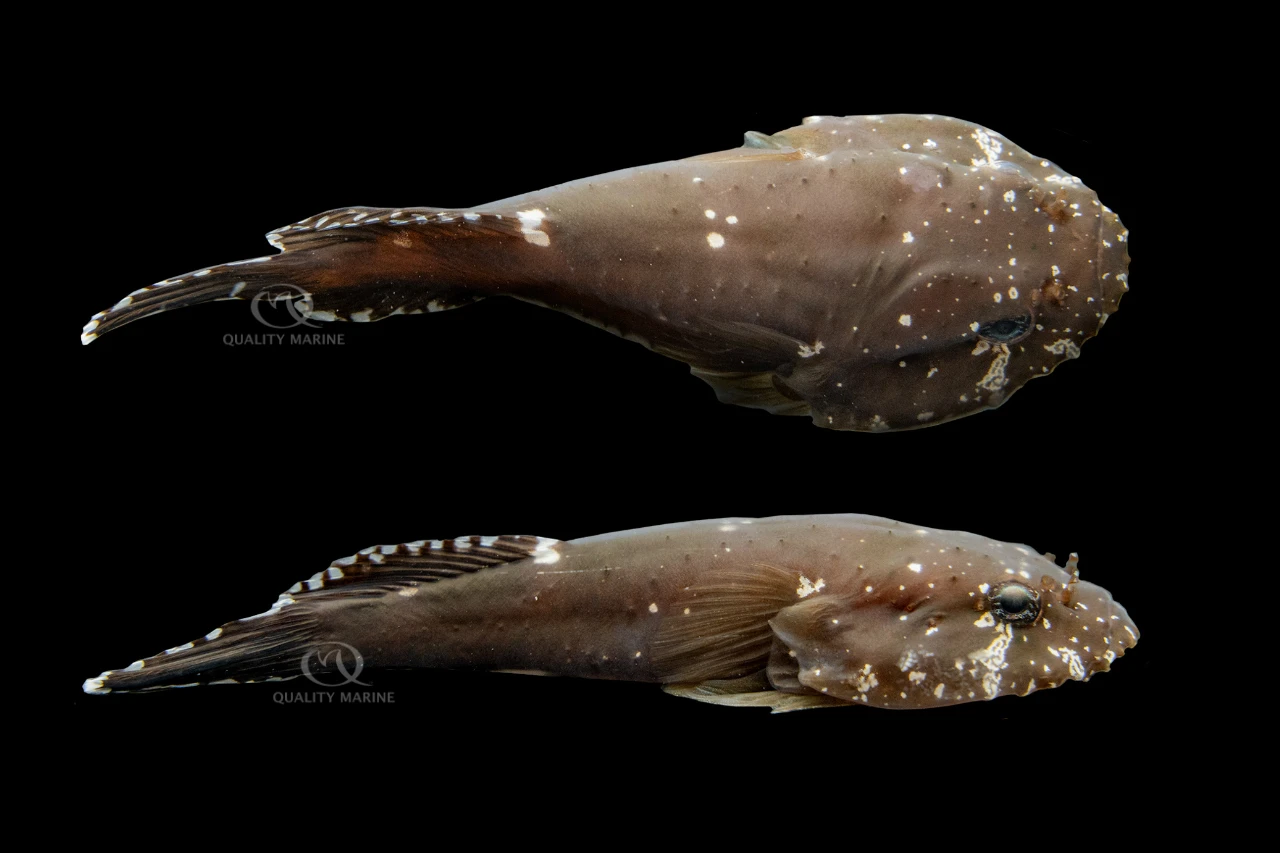
Nearly all of us who went through grade school in North America (and paid moderately good attention) understood symbiosis as two animals living together to the mutual benefit of both. This was a happy story and remains so in the instances where both the critters actually get something out of the relationship. For those of you who didn't pay attention, and for everyone who never bothered to dig deeper, this mutually beneficial relationship is one of three types of symbiotic behavior and falls into the category of Mutualism. There are two other kinds; one is called Parasitism, where one creature benefits and one creature is harmed (yup, think parasites like intestinal worms...) The last remaining kind is called Commensalism. This happens when one of the species benefits from the relationship, and the other is unharmed, but not benefited.
This type of relationship is very common and can sometimes be difficult to separate from the other two. For example, the fish we're highlighting today is Diademichthys lineatus. It is a tiny fish (less than two inches long at maturity) that often lives around and in between the spines of Long Spine Sea Urchins. The Urchin seemingly gets nothing from this relationship, and the fish gets protection. Where the line starts to get foggy is that the Diademichthys will also often eat little parts of the urchin called tube feet (organs that help them move, manipulate food, and even breathe). This sounds like Parasitism, but under normal circumstances, the urchin grows these back faster than they are consumed, and so is not meaningfully harmed in the long term.
This behavior is the source of one of its most widely used common names, Urchin Clingfish. Diademichthys lineatus also gets called the (Yellow) Striped Clingfish, and sometimes you'll see it marketed as a Long Snout Clingfish. This last name may come (in part) because the females of the species have a noticeably longer tweezer-like snout while the males have a more snub-nosed appearance. It has been hypothesized that the males are more likely to feed on Urchins than the females.
This naturally leads to a couple questions, like, “what else do they eat?” Their diet actually mostly consists of inverts like little worms and copepods as well as shrimp and fish eggs. When choosing foods for them, you'll need to pick things that are nutritious and have a small bite size. Things like Gamma Rotifers, Copepods, Brine Plus Omega etc. are all good-sized foods. Nutramar Ova is an absolutely perfect food for Diademichthys lineatus as is the Nutramar Liquid Feed – Copepods. Over time you'll likely get them to take high quality, processed food and here the choice is obvious, Nutramar Marine Complete Crumbles. You'll want a tiny bite size which is achievable with the Crumbles, and really excellent nutrition, which is the calling card of all the Nutramar foods. If your specimen is hesitant to eat, you can coax them into feeding with live foods, and among these, Nutramar Live Copepods and Nutramar Live Artemia (and Nauplii) are the correct choices.
The other question that pops immediately to mind is “can I keep them with Urchins?” The answer is yes, you can, but there is a caveat. You need enough food and space for the Urchins, and we would suggest having a few. In the wild, there are many more Urchins than Clingfish, and so the feeding is not impactful. To this end, you'll also want to make sure your Yellow Striped Clingfish are well fed. On the other hand, Urchins are NOT required. Diademichthys lineatus is often found in seagrass beds and around corals reefs without an urchin in sight, so these are great little oddball fish for smaller reef aquariums too. In regard to other fish, you want peaceful stuff. Clingfish are incredibly docile, and you can keep groups of them together, though sometimes males will get feisty with each other if there isn't enough space. You want fish that aren't going to bully your Clingfish or out compete it for food either. Fish like Dragonettes, Firefish, Marcropharygodon Wrasses, and our personal favorite, Cultured Banggai Cardinals. A few big Longspine Urchins with a Group of Banggais with a Clingfish makes for an amazing display.
Water quality and chemistry wise, these fish aren't all that picky. If you're keeping Urchins or Corals, you already have what it takes. Stability is always key and clean water is a must for the Urchins. Keep your pH as stable as you can between 8.0 and 8.4. Make sure that salinity stays rock solid and don't skimp on water change day.
If you're looking for a feature fish that fits in a small tank, Diademichthys lineatus is a great choice. They're not something you see all the time but are beautiful and feature a really interesting swimming motion. If you want highlighted oddballs for a larger peaceful display, these little guys might also be what you're looking for. Head to your local fish store and ask them to get you a Yellow Striped Clingfish from Quality Marine Today!