Feeding Angle
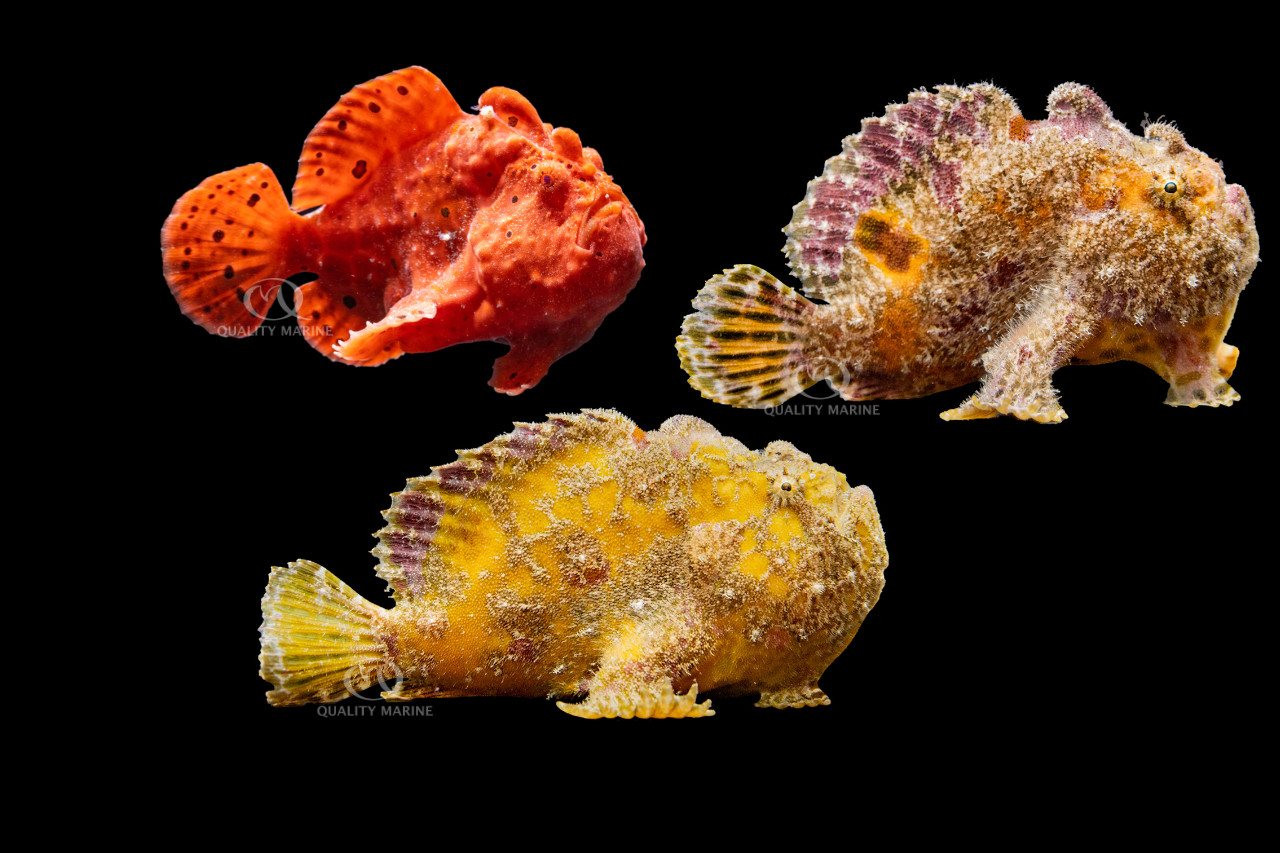
Anglerfish are among the coolest things you can keep in an aquarium. They're all interesting to look at, frequently wildly colorful and always amazing to watch them eat. That last part, however, is sometimes tricky to get started. In fact, getting an Anglerfish to eat in a home aquarium is probably the most common hurdle new keepers run into with this group. Anglers are all ambush predators; built to sit motionless against the substrate or tucked into a ledge, twitching a modified dorsal spine (called an illicium) which is tipped with a little lure (called an esca) until something curious or hungry swims close enough to get inhaled in a fraction of a second. In the wild, that lure does all the work. Fish see a tasty morsel bobbing back and forth and they swim right into range, only to get gulped down by the well camouflaged Angler. In captivity, unless you're feeding live food (a topic we'll revisit) a lot of Anglerfish simply won't recognize a motionless piece of meat sitting on the sand as something worth eating, and that's the puzzle you're solving as a keeper.
Quality Marine carries a genuinely impressive range of anglers and even though we're a wholesale operation, you can still special order anything you find on our website through your local fish store. The lineup includes the Colored and Zebra Sargassum Anglerfish, both Histrio histrio, drifting weed-mimics that look like a clump of sargassum brought to life. There's a general Frogfish listing under Antennarius sp. for variable, unspecified color forms, alongside the Red/Orange Wartskin Anglerfish and standard Wartskin Anglerfish, both Antennarius maculatus, which are some of the most photogenic and popular anglers in the trade. The Shaggy Anglerfish, Antennarius hispidus, sometimes called the Hispid Frogfish, brings a genuinely bristly, textured look that's rarely seen even among experienced reefers. The Striated and Tiger Striated Frogfish, both Antennarius striatus, are known for wild banding patterns and long esca. The Sun Drop and Tangerine Dream Pictus Anglerfish, both Antennarius pictus, are two of the most vividly colored forms available, covered in little wart-like tubercles and ranging from sunshine yellow to deep orange. And for something genuinely massive by Anglerfish standards, the Black Commersoni Anglerfish, Antennarius commersonii, also known as the Giant Frogfish, is an uncommon but spectacular offering that can grow considerably larger than its cousins. Given the right aquarium set up, all these could be the centerpiece of a jaw dropper display.
Which one you have really won't matter if you struggle to get it feeding. Luckily, as ambush predators, most of their metabolisms are tuned to eating large meals, but infrequently, so you don't have to fret if it doesn't want your offerings for the first couple days, unless it is really little (think anything baseball sized or smaller). There really isn't a huge mystery here; your Angler wants its food to move, full stop. You gotta wiggle it, just a little bit. Using a feeding stick with a piece of meaty food attached to the end lets you wiggle that food through the water in a way that mimics a swimming fish or shrimp, and that motion alone will usually trigger a strike. Hold the food a few inches from the angler's mouth, twitch it gently, and let the fish's own predatory instinct do the rest. Most anglers, once they lock onto that movement, will strike explosively, engulfing the entire offering in one motion, so that thawed out silverside or bit of fish will be swallowed before they could ever realize that it was thawed out and not living. Also, this is SOOOOO amazing to do and watch. You're going to startle jump the first time it happens!
Pretty much every Anglerfish will come around to this type of feeding sooner or later. For the ones that are slow to learn, live feeder shrimp and/or small live fish pretty much always work and are just about as exciting as the stick feeding method. A clean and nutritious source of food is needed here. Some aquarists raise Mollies in full saltwater as a clean food source for their predator fish. It's important to gut load these fish before feeding them so they offer the highest level of nutrition possible to the Angler. Nutramar Marine Complete pellets and crumbles offer the best way to easily get this done. Make sure your feeder culture is always being fed good food, and generally you should heavily feed (overfeed) the Mollies or Guppies right before you feed them to the Angler. Live foods always bring some risk of bringing parasites or other pathogens into your tank. If you have a clean, reliable source for live food, go ahead and use it, but our suggestion is to always raise your own. This allows you to fine tune your gut loading and avoid any contamination issues that could arise.
The safest option for feeding your Anglerfish is always Gamma's whole frozen fish product. Not only does offering a whole frozen fish, thawed and wiggled on a feeding stick, gives your angler a complete, nutritionally balanced meal that closely mimics natural prey in size and shape, but because all Gamma foods are flash frozen and then gamma irradiated, you can have 100% confidence that no pathogens are entering your system through feeding. Happily, most anglers transition to accepting these quite readily if you use a feeding stick. After a while, the fish will often accept them without the feeding stick as long as the fish is close to them. For some variety you should also rotate in Gamma's frozen shrimp and other larger meaty offerings alongside the whole fish.
Because Anglerfish are ambush feeders that swallow prey whole and in large portions rather than grazing steadily, they're substantial waste producers relative to their size, and this is something every prospective keeper needs to plan for. A single sizable meal, digested over a day or two, puts a bioload on your system that isn't consistent. Skimping on filtration or protein skimming is a mistake that could catch up with Anglerfish keepers (and truthfully any keeper of a large predatory fish.) Strong mechanical and biological filtration, a quality protein skimmer, and (perhaps most importantly) a real commitment to regular water changes are non-negotiable.
Aquascaping for Anglerfish should be built entirely around their sit-and-wait lifestyle. A soft sand or fine rubble substrate gives most species a comfortable surface to settle onto, since many anglers will nestle partially into loose substrate rather than sitting fully exposed. Live rock arranged with ledges, overhangs, and small caves gives them structure to back into and camouflage against, and species like the Wartskin or Shaggy Anglerfish will often color-match themselves to whatever rock or sponge-like structure they're parked against for extended periods. Keep water flow gentle to moderate rather than strong, since these are not active swimmers and don't want to be fighting current all day just to hold position. Sargassum Anglers are the one exception worth mentioning, since in the wild they drift among mats of floating sargassum weed rather than sitting on the bottom, so a bit of macroalgae or a decor piece that lets them grip and hide within a leafy structure suit that species particularly well.
This leads us into reef compatibility, and Anglerfish are perfectly reef safe in the sense that matters to your corals: they have zero interest in eating or harassing your zoas, LPS, SPS, or any other sessile invertebrate. What they are absolutely not safe with is anything small enough to fit in that cavernous mouth. Small fish, shrimp, and any other tankmate sized to look like a meal will eventually become one, often with startling speed given how quickly these fish strike. Anglers are best kept alone, in a species-specific setup, or alongside only larger, robust fish that have no chance of being mistaken for prey and have no interest in picking on the Angler.
Anglerfish reward patience more than almost any other group in the marine hobby. Once you've got the movement-based feeding technique down, transitioned your fish onto frozen whole fish and other prepared foods, perhaps grown yourself a clean, consistent and nutritious feeder culture, and built a tank that respects both their ambush lifestyle and their inconsistently heavy bioload, you'll have one of the most genuinely engaging, personality-filled oddballs the reef trade has to offer. Talk to your local fish store about sourcing one of Quality Marine's Angler species and get ready for a fish that turns feeding time into the best show in your (or any of your friend's) fish room.