Advancing Aquarium Aquaculture in Pelagic
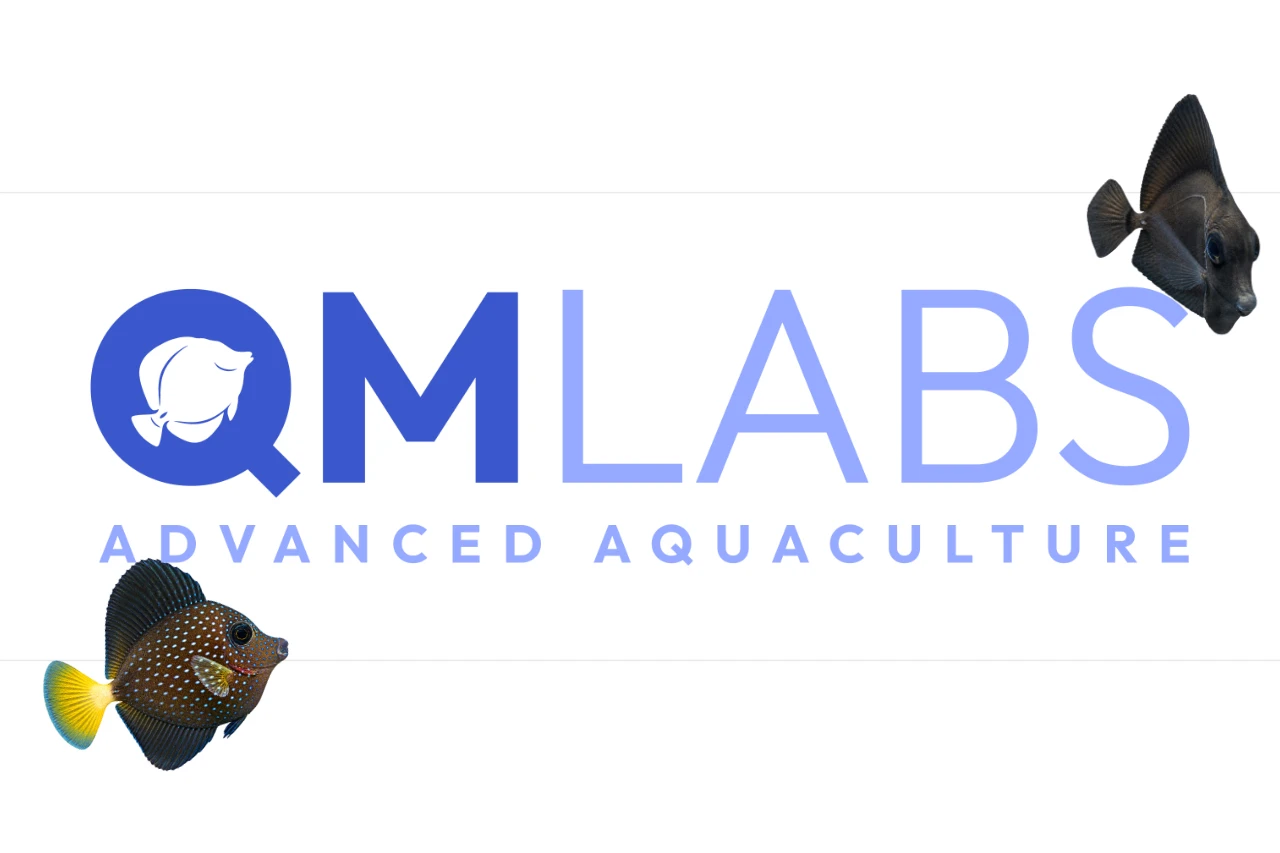
Every day is a cool day at Quality Marine. That said, some days are astoundingly cool and over the past several months, we've had a couple chart toppers. In February we got to announce the world's first aquacultured Gem Tangs (Zebrasoma gemmatum), and in May we followed it with the world's first aquacultured Black Longnose Tangs (Zebrasoma rostratum). Both were bred and raised at QM Labs in Los Angeles, and both are fish that hobbyists (and professionals alike) have long been yearning for.
Start with the fish themselves, you've probably guessed what they have in common, rarity (and genus, FYI). Gem Tangs come from the Western Indian Ocean, around South Africa, Mozambique, Madagascar, Mauritius, and Réunion, where they graze on benthic algae at depths from about 23 to 200 feet. Traveling from this region to North America is long and fraught with complications, making them extremely hard to get here. Black Longnose Tangs live across a scattering of remote Eastern Central Pacific islands, including the Line Islands, Marquesas, Society Islands, and Tuamotus out to Pitcairn. Black Tangs are only occasionally available, and usually the specimens available are quite large. This makes both species a bit out of reach, which is part of why we all covet them.
Rarity is only part of the story, though. The harder part is how these fish are raised. At this point, pretty much everyone who might be reading this knows that getting adults to spawn in captivity is nearly impossible, and getting the resulting larvae to develop into healthy, feeding fry is harder still. We've written before about how much of this comes down to nutrition, and it starts well before any eggs are laid. Healthy broodstock produces more eggs, better egg quality, and stronger larvae. From there it's a careful progression of tiny live foods, from rotifers to copepods to artemia, all nutritionally loaded with live phytoplankton, before the young fish are slowly weaned onto prepared diets. It takes a lot of patience and a lot of proprietary science, and we don't ever claim it's a matter of luck because it isn't, but a little luck never hurts.
That same work is what makes these fish good aquarium citizens. Because they're raised in controlled environments, with regular human interaction and formulated diets from their earliest life stages, they come pre-adapted to aquarium life. Both species come actively feeding on Nutramar dry foods, readily accepting pellets, crumbles, Nori and Ogo. A fish that arrives eating prepared foods and well-conditioned has a much better shot at long-term success in your tank.
We should be clear about what this doesn't mean. Availability will be extremely limited at first. Learning to do something once is a milestone, but doing it repeatedly and at scale takes refinement, and we're committed to that work. We're not promising a flood of captive-bred Gem or Black Tangs next month. We are promising that we'll keep improving our methods so that more of them can reach you overtime.
It also doesn't mean we're stepping away from wild collection. We've supported responsible, sustainable wild harvest since our earliest days, and we have no interest in disrupting it. Done well, it can continue indefinitely without lasting impact on local environments, and it supports coastal fishing communities that are often facing real economic hardship. Independent studies have repeatedly found that harvesting ornamental fish delivers greater economic benefit and far less environmental impact than the sustenance fishing those communities would otherwise depend on. Many of those same fishers have even moved into aquaculture and mariculture of their local species, which we fully support. We see aquaculture and responsible wild collection as complements, not competitors, and a healthy aquarium trade needs both.
That's the real significance of these two tangs. They show that species once considered commercially unviable in aquaculture are within reach. They add to a growing roster at QM Labs, which has already offered more than twenty species, from Clownfish and Gobies to Purple Tangs, and which is deliberately focused on demersal and pelagic species with little or no history of commercial culture. Every new success makes the next one more plausible and gives hobbyists another reason to be hopeful about where this is going.
We're a bunch of fish geeks who are lucky enough to get paid to chase these answers, and we're not done. Gem Tangs and Black Longnose Tangs are the newest chapters, not the last ones. We'll keep refining, keep scaling, and keep trying the things people say can't be done. If you're thinking about adding one of these tangs to your system someday, read our articles on them, give it a big tank, lots of rockwork for grazing, stable and pristine water, with plenty of algae to graze, and we know you'll be rewarded. Make sure you always ask for Quality Marine and QM Labs fish!