The Big Bower's
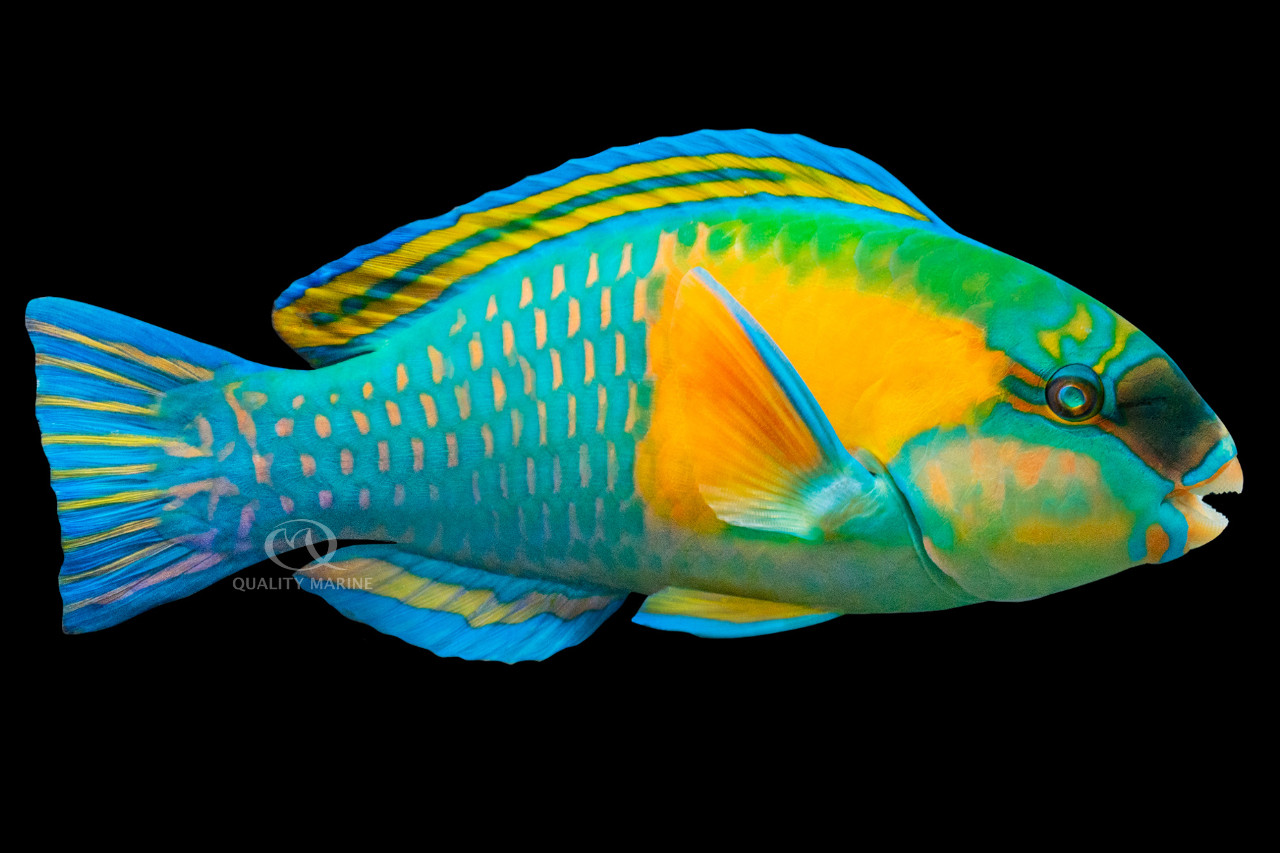
Bower's Parrotfish is also sometimes called just Bower's Parrot and also frequently dubbed the Orange Blotch (or Spot) Parrotfish. When you see the adult male of the species, the orange bit makes sense, and while the females and juveniles also sport that coloration it is much less pronounced, so we stick to Bower's Parrotfish. Scientifically they're known as Chlorusus bowersi. They were not named for the notorious bad guy from the world of Super Mario, but instead named for an American Politician, George Meade Bowers, who also served as the Director of the US Bureau of Fisheries and the United States Commissioner of Fish and Fisheries at different times in his career.
Parrotfish are always at least two things, picturesque and polarizing. The first is easy, nearly all the species we lump within the group of Parrotfish are visually stunning and Bower's Parrot is no exception. They shine like a polished piece of turquoise with a bright orange spot and vertical dashes of peachy gold along their tail sections. This is a fish you aren't going to miss. They are often polarizing because they tend to get large, and some species can be hard (and/or very expensive) to feed in captivity, which in the end hurts their chances of success in the home aquarium.
To that end, Bower's Parrots do get big, this fish is very likely to be a bit more than a foot long in your display at adulthood. The largest specimen on record is just shy of 16 inches long and one pound 11 oz, caught of Kagoshima Japan in 2022. They are very unlikely to reach this size in the wild or the home aquarium. Bower's Parrotfish are very common in the western Pacific, being found pretty much everywhere from southern Japan down to northern Australia. They're usually collected in quite shallow water (less than 50 feet deep or so) in areas that are coral rich. They are a common food fish wherever they are caught locally as they are only ever offered fresh.
Another interesting side note is that Chlorusus bowersi is always found singly, even as a juvenile, and that's how we suggest you keep them in your home aquarium too. This aquarium should obviously be very large to house a big, active fish, think in the range of 300 plus gallons. The teeth on any Chlorusus genus Parrotfish are very pronounced, with no lip covering them. As a result, they can scratch acrylic aquariums, though this is rarely a concern, you may want to give it some thought. Flow should be high, mimicking their wild setting. Shoot for at least 20x the total tank volume in flow. Lighting will be immaterial to the fish, and they are accustomed to very bright light in the wild. They don't need a sand bed, but they do need a lot of rock as they'll spend a large portion of their day “gnawing” algae off any hard surface they find. In the wild, this often includes dead and dying coral which has given them a reputation for “eating” coral. Rockwork should be balanced between having plenty of open swimming space and providing enough cover and hidey spots for your fish to retire to.
On the topic of an evening’s rest, Bower's Parrotfish have a very interesting nocturnal ritual where they actually secrete a cocoon from a gland at the base of their gills to overnight in. This is sometimes called “Parrotfish Pajamas” by Parrotfish keepers and nighttime scuba enthusiasts. The cocoon looks like a clear jelly and covers the fish's whole body. There is good data showing this helps protect them from parasites. It is also postulated that it helps mask the fish's scent from predators and acts like a tripwire to wake the fish up if the cocoon gets disturbed.
This cocoon making takes some energy for the fish to do every night, and Chlorusus bowersi is an active fish, and so getting them good food, and enough of it, is paramount to keeping your Parrotfish happy and healthy. As we've touched on, a very important part of their diet is algae. That aside, they also eat a large amount of invertebrates, both incidentally as they eat small critters hidden in the algae, but also intentionally. So it is important to get these fish a broad-spectrum diet and plenty of it. Here we feed them a mix of meaty food from Gamma, as well as dried Algae and Pellets / Shots / Crumbles from Nutramar. The Nutramar Algae and Color Plus Shots are nearly perfect food. It offers pretty much everything your Bower's needs in a food that mimics the natural feeding style of the Parrotfish. We also like to use the Nori and Ogo to supplement the algae levels in their diet which is important for digestion as well. We feed them twice a day, and more would be okay too.
While we don't recommend keeping Parrotfish with other Parrotfish, they are generally pretty peaceful with other species. There are always outliers. You'll sometimes have individual Bower's that will take exception to another fish that is similarly shaped to the Parrot. The best fit is probably a FOWLR aquarium, though we have seen them being kept successfully in very large, healthy reef tanks. There is some risk here as there isn't any thing from stopping the Chlorusus bowersi from sampling corals to see if it is algae, and even if they don't eat the corals, they could irritate the corals to death; Bower's Parrotfish are high risk with clams.
Chlorusus bowersi are hardy fish once acclimated and don't have incredibly specific water or chemistry parameters you need to stick to. They can be sensitive fish in regard to changes to the parameters, so stability is key. They can also be sensitive to elevated nutrients, so make sure to keep nitrates under 2ppm. We don't suggest Bowser's Parrotfish for a brand new aquarist, but for those of you with a little more salt in your blood, this is one of the most beautiful and active fish you can have in a tank and as such, it's worthy of your consideration. If you have the space, and are up to the task, head to your Local Fish Store and tell them that QM sent you!