Pairing mangroves and coral reefs could boost carbon storage
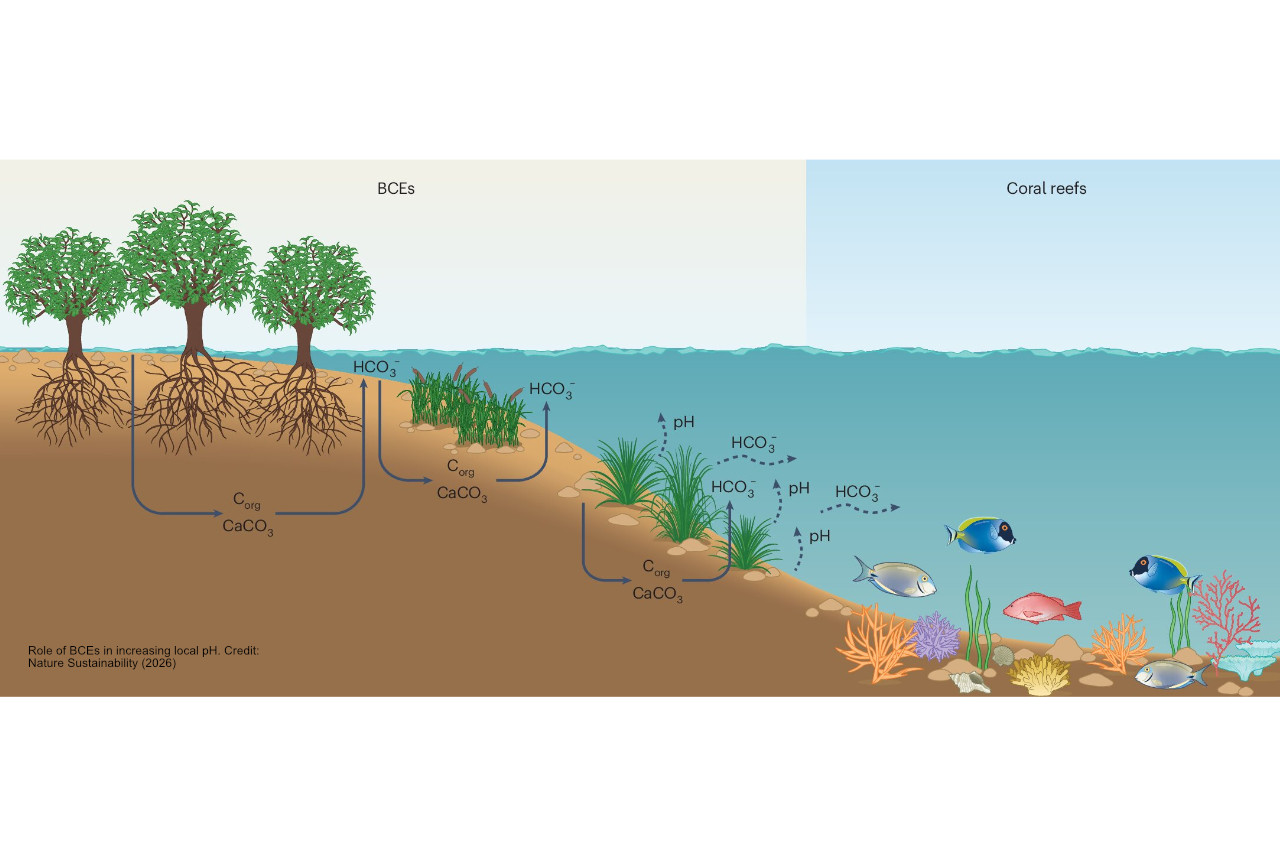
As atmospheric carbon emissions reach record levels, recapturing and storing carbon has become increasingly urgent. While many technological solutions remain difficult to scale, nature-based approaches such as blue carbon ecosystems (BCEs) offer proven alternatives. These ecosystems — including mangroves, seagrasses, and salt marshes — naturally capture and sequester carbon while providing broader environmental benefits. Research by Mojtaba Fakhraee proposes that strategically restoring BCEs can deliver dual advantages by also supporting the recovery of nearby coral reefs.
BCEs contribute to healthier coastal systems through multiple physical, chemical, and biological processes. By absorbing carbon, they can locally raise seawater pH, helping counter ocean acidification — a major driver of coral bleaching and reef decline. These ecosystems also enhance nutrient cycling, stabilize sediments, and reduce wave energy, all of which improve conditions essential for coral reef survival and growth. Additionally, co-located BCEs and reefs create interconnected habitats that benefit marine wildlife, supporting species whose life cycles depend on both environments.
Despite their value, BCEs have been heavily degraded by climate change and human activity, making restoration both necessary and challenging. Funding instability, often tied to shifting government priorities, remains a major barrier. Fakhraee’s conceptual framework highlights how pairing BCE and coral reef restoration could improve project outcomes while opening new financing opportunities, such as carbon capture credits. The framework also emphasizes the need for further research into carbon storage limits, long-term sequestration capacity, and ecosystem resilience following extreme events.
Fakhraee explains that co-locating blue carbon ecosystems with coral reefs could create new revenue streams, generate jobs, and strengthen coastal community resilience while supporting ecosystem restoration. He emphasizes the importance of developing carbon credit and trading networks to finance such projects, noting that even nature-based solutions require stable funding to scale. With declining federal support, he argues that creative, community-driven approaches are essential, as restored ecosystems can boost local economies through benefits like tourism and become more self-sustaining. According to Fakhraee, demonstrating clear, tangible advantages at the community level is critical, since widespread public support will ultimately determine whether carbon capture initiatives can be deployed at meaningful scale. To learn more, please head to Elaina Hancock's article Pairing mangroves and coral reefs could boost carbon storage