It's A Moo Point
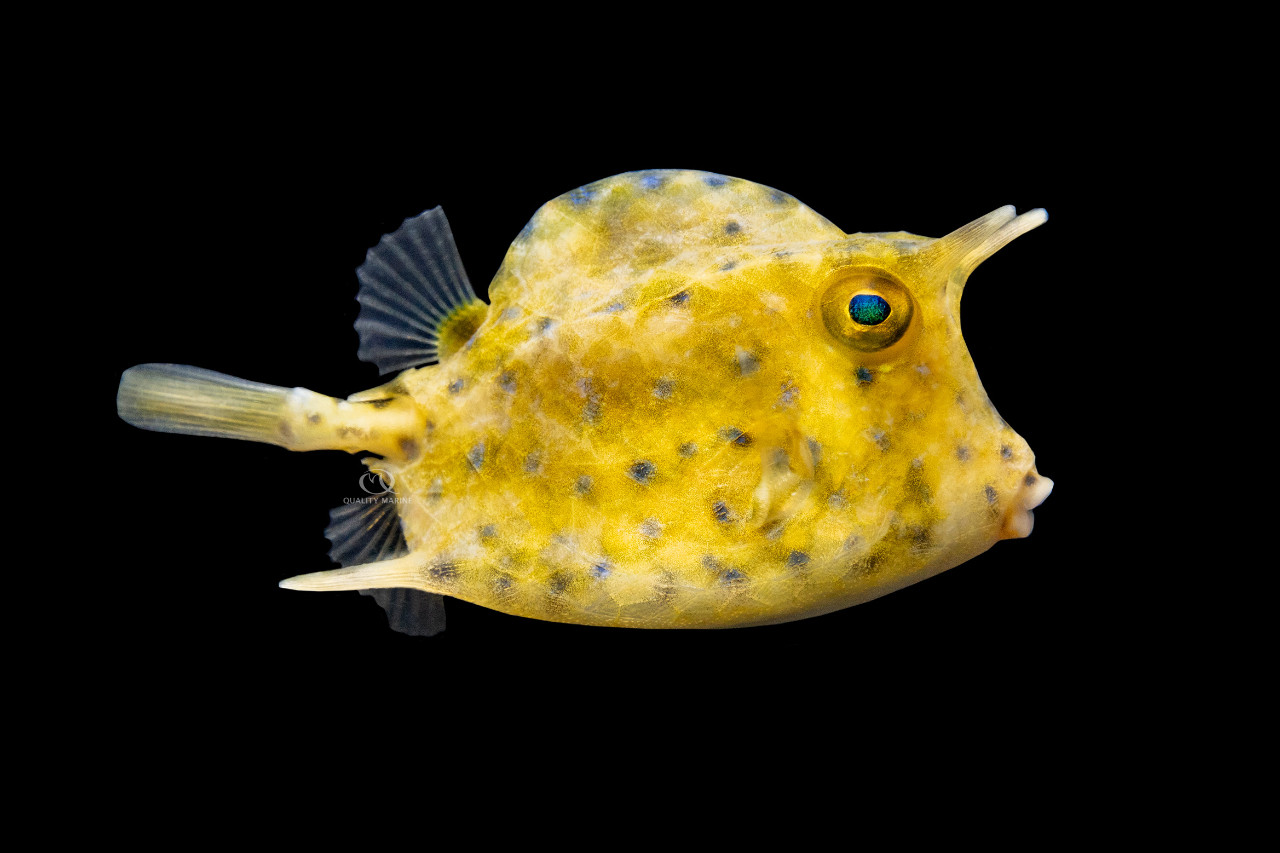
Acanthostracion quadricornis is the “Correctly Pronounce a Binomial Nomenclature Challenge” for today. The first bit (Acanthostracion) is Greek and basically means thorny shell. This makes sense as all the fish in this genus have external, rigid, bony armor, composed of oversized scales that form a protective box for them to live in. It’s why they are often called Boxfish. The species portion of this name is quadricornis, which translates into English as something like “four horns.” Two of these horns are at the bottom rear of this boxy shell, just in front of the fish's anal fin. The other two horns are at the very front, just above their eyes, giving them the cow-like horns that are the genesis of their other common name, “Cowfish.” This specific fish is most often commonly called the Scrawled Cowfish, though it also goes by Shellfish, Boxfish and Trunkfish in English, with dozens of other names and translations around the world.
Scrawlies are some of the most interesting and beautiful fish in the West Atlantic, somewhere between a metallic, green and soft gold color, with blue markings drawn all over them that could be almost navy blue but could also be absolutely neon. They are most often found in slow moving waters over mudflats, in seagrass beds and protected lagoons and inlets (not the strongest swimmers, which makes sense given their tank-like bodies.) They prefer relatively shallow water where the sunlight makes the grasses grow but have been found as deep as 100 feet or so. They are most often collected from tropical areas but have been found as far north as the Massachusetts coast and south to Brazil. They are almost always solitary fish, (and this is how we recommend you keep them,) though there are records of spawning congregations.
Scrawled Cowfish spend most of their day swimming around grazing on pretty much anything they can get into their mouths; small invertebrates like snails, shrimp and worms are all on the menu, but so is algae, diatoms, and according to some reports, also cyano. Unfortunately, for those of you who'd like to see this in a reef tank, they are also going to nibble on coral polyps, clams, gorgonians, and everything else that seems like it might be tasty. This wild feeding behavior means they will see many different things as food, but it also means they need to be fed multiple times a day. Here we love to use the Nutramar Algae and Color Boost Shots, to give our Acanthostracion quadricornis something to graze on, but we also feed them the Pellet, along with a mix of meaty foods from Gamma including Mysis, Chopped Prawn, Chopped Mussel, Brine Plus Spirulina, Brine Plus Omega 3, Mosquito Larvae, Bloodworms and others. These are shy fish, especially initially, and so you may need to give them some live Brine or Glass Shrimp with their frozen food to get them to come out and eat. Once they recognize you as a feeder, not an eater they'll be much bolder.
Cowfish in general get large but grow slowly; those bony plates take a while to get bigger. The world record for catching one is a tie. Two separate Anglers both caught a one-pound Scrawled Cowfish off the same beach, one day apart in Florida! You have to wonder if it is the same fish! While there wasn't a length for that fish listed, the longest one on record is 22 inches. We've never seen one close to that long around here. They commonly get eight or nine inches long, and we've seen them up into the 15- or 16-inch range a couple times.
All this is basically to say, this fish is going to need a big fish tank, with some specific requirements. We'd suggest nothing less than 240 gallons. They don't need a sand bed, but if you have one, they will dig around in it for stuff to eat. There can be some rock work, but it should be fairly open, leaving plenty of room for swimming. Filtration should be strong, but return flow needs to be diffuse and gentle, these guys can easily get blown around. Lighting is fairly irrelevant, Scrawled Cowfish are accustomed to pretty bright lighting, but don't seem to mind much one way or another, we opt for somewhat lower power lighting, that is heavy on the actinics to really make the blue markings pop!
Scrawled Cowfish are super peaceful. Very few things are interested in eating them in the wild because of the bony, pointy bits. When you keep them with other fish, your primary focus should be on the wellbeing of the Cowfish. Don't keep them with fish that are notorious nippers, aggressive or overly territorial. On the other hand, avoid fish that are very small and slow as they might get sampled as food themselves. Good tankmates might include stuff like Fairy Wrasses, Cardinals, some Clowns, Anthias, Filefish, Rabbitfish and Goatfish among others. Scrawlies are going to eat some snails, hermit crabs and shrimp, so give those things some places to hide, and restock them as needed. We suggest not keeping Acanthostracion quadricornis with Sea Stars who will suffer from being picked on.
You would be hard pressed to find a more beautiful, more interesting, or even more odd aquarium fish than Acanthostracion quadricornis. They don't need anything crazy in regard to water quality or water chemistry, just good stability and keep the nitrates down. They are super adaptable to different temperatures as well. When stressed from being picked on, or from unstable conditions, Cowfish can emit a toxin that can harm or even kill other fish, so it is important that they stay happy. If your fish is looking stressed remove it to another tank until it recovers and figure out what the stressor is. (Activated carbon can remove the toxin from your aquarium). Scrawled Cowfish won't be for everyone, certainly not for novice aquarium keepers, but for the people with a little salt in their veins, this is one unique and gorgeous aquarium fish. Ask your LFS about getting you one from Quality Marine today!