Anemones Anonymous Pt 1
It's Saturday morning, and everything is all right in the world, because you're walking around your favorite local fish store looking at what new stock they got in this week. Then, there it is, in a well-lit invert tank in the corner of the store, it's a beacon in the darkness, calling out to you: a brilliant green carpet anemone, shimmering under actinic lighting like a bit of magic cut loose in the real world. There's five little True Percula Clowns swimming around, over, under and through it. It's a tractor beam sucking you in and you ignore everything else as you walk up to it, heart beating fast and you don't know if it's love, but you do know one thing. You need this anemone.
We get it, we've been there and we don't want to stand in the way of true love. That being said, pump the brakes just a tiny bit. There isn't a one size that fits all way to take care of Anemones, and they certainly aren't all created equal. A carpet nem is one of the most beautiful things you can have in an aquarium, but they aren't for beginners with new tanks.
All that being said, we want you to have an Anemone. You already know how special of a thing that is; it only takes a glance. In the grand scheme of things, there are some eases of care groups that aren't hard and fast rules, but good guidelines to think about. The easiest Nems to keep are Condys. If you're a beginning aquarist and have a pretty new tank, Condy's and Rock Nems are the hardiest way to go, but they won't generally host clownfish (although this does rarely happen). Bubble Anemones, both Rose and Green Bubs along with LTAs (Long Tentacle Anemones) are beautiful, come in a huge number of appearances and happily are suitable for most aquarists that have an established aquarium and some experience keeping a marine tank. Carpets are next on the list. If you're an established reefkeeper and have a tank that is stable (and has been for a year or so) you should be able to keep a Carpet Anemone happy. Similar to Carpet Anemones in difficulty is Heteractis or Sebae Anemones. It's definitely doable, but we want you to have a little salt creep in your hair before you try it (if you've cleaned out enough tanks, you'll get it). At the most difficult end of the spectrum is Ritteri Anemones, also frequently called Magnificent Anemones, and they deserve the name. They can get huge and are some of the most gorgeous animals you'll ever see but are for the most experienced aquarists only. They are very easy to shock, very intolerant of change and require diligent care and bright lighting. If they die, they can take a whole tank with them, which happens really quickly. Do not take this warning lightly.
Regardless of which direction you choose to go, it's important to understand the general needs of that specific animal; care for each one has its own nuance. What they have in common, is all anemones will need good light, good flow that is turbulent (never laminar or uni-directional) and food. The degree of which each anemone will need these care categories is somewhat variable by type.
Feeding Anemones is probably the biggest key to success with them, and one that a lot of people overlook. Anemones are host to photosynthetic organisms called zoxanthellae, just like corals and clams, but most won't thrive on the sustenance provided by that alone. They are sticky/sting for a reason, and that is so they can catch small fish and eat them. Anemones can take a chunk of food that is as big as their oral opening and large nems can take down surprisingly large fish as long as they can fit it in, one direction or another. Gamma Whole Fish and Whole Mussel are great foods. Make sure they are at the same temperature as the aquarium before feeding. Just place a chunk into the tentacles of the anemone near the oral opening and the nem will finish the job for you. Sometimes the clowns will even push the food toward the “mouth” (though as they are also responsible for waste removal, sometimes they get it twisted and remove the uneaten fish). It will take a day or two for the food to be processed and it will then be *ahem* deposited out of the same orifice. Most Anemones will only need feeding once or twice a week. If yours ever kicks food out digested, it isn't hungry. Try again tomorrow.
The easiest choice (and best for beginners) is a Condylactis. Most of them are white to pale blue or pale yellow and some will have colored tips. They are very hardy, stand up to shipping well, and because they are often collected from tidal areas, they are usually quite accustomed to varying water temperature, and even water quality. Their biggest drawbacks are that they may or may not be a host for your clownfish (in fact it may eat them), and they have a tendency to migrate all over the tank. That means they aren't great choices for aquariums that have a lot of other sensitive invertebrates. You'll also want to cover the intake for your filter system with something fine like sponge, as they could get lodged in it if they happen to migrate that way, which will definitely be a problem for the Nem, and for you.
There are two excellent choices for anemones if you are looking for a host. First, we'll talk about Long Tentacle Anemones (Macrodactyla doreensis), which are an excellent and hardy choice. They come in a wide variety of colors/patterns and are tolerant enough to live in most established tanks. They'll stick to one spot once they are established which will usually be half under a rock on the bottom of your tank, stuck to the glass. They'll host a good number of Clownfish species, Clarkiis and Pink Skunks are the most natural pairing, but we've seen Percs and Ocellaris as well as Tomatoes, Saddles and Maroons use LTAs as home too. They only need moderately intense light and flow.
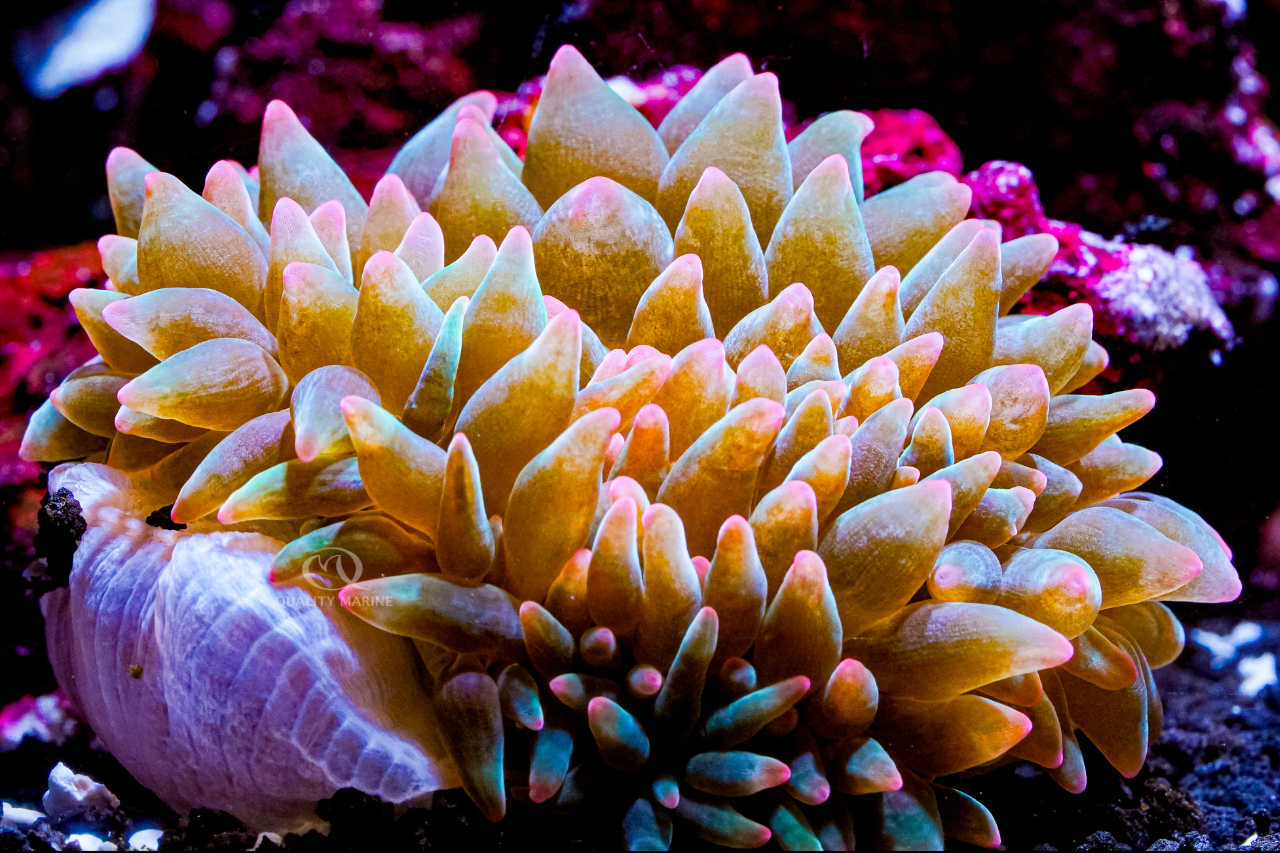
The other (and maybe true) “best” nem is the Bulb Anemone (Entacmaea quadricolor). These come in two general colors, green and rose, but there is quite a bit of variation in the rose varieties, some of which are absolutely mind blowing. Greens generally come from deeper water and are more food dependent, where Roses thrive under really bright lighting. Both colors will find a spot on your rocks or glass and generally stay there if happy. Greens will continue to grow and can get a foot or more across, where Roses will generally split into more anemones if they're really happy. One of the most stunning aquariums we've ever seen was at a partner store, years ago here in LA where their Rose Bulb had split so many times that the entire 75-gallon display was covered in them like one big anemone just coursing with Clarkii Clowns. Brighter lighting and lower flow situations will help them keep their bubbly appearance, though they can live long, healthy existences with their tentacles extended. Just about any clownfish will accept a Bubbletip as a home, but the natural pairings are Clarkiis, Tomatoes, Cinnamons, Ocellaris, Maroons, and Akindynos.
This leaves three more big groups, including your one true love, Carpet Anemones, so come back next week for the second installment of Anemone's Anonymous, where we'll also talk more about water quality, water chemistry as well as Sebae, Carpet, and Magnificent Anemones!