The Jewel Of The... Ben Hai? Yup.
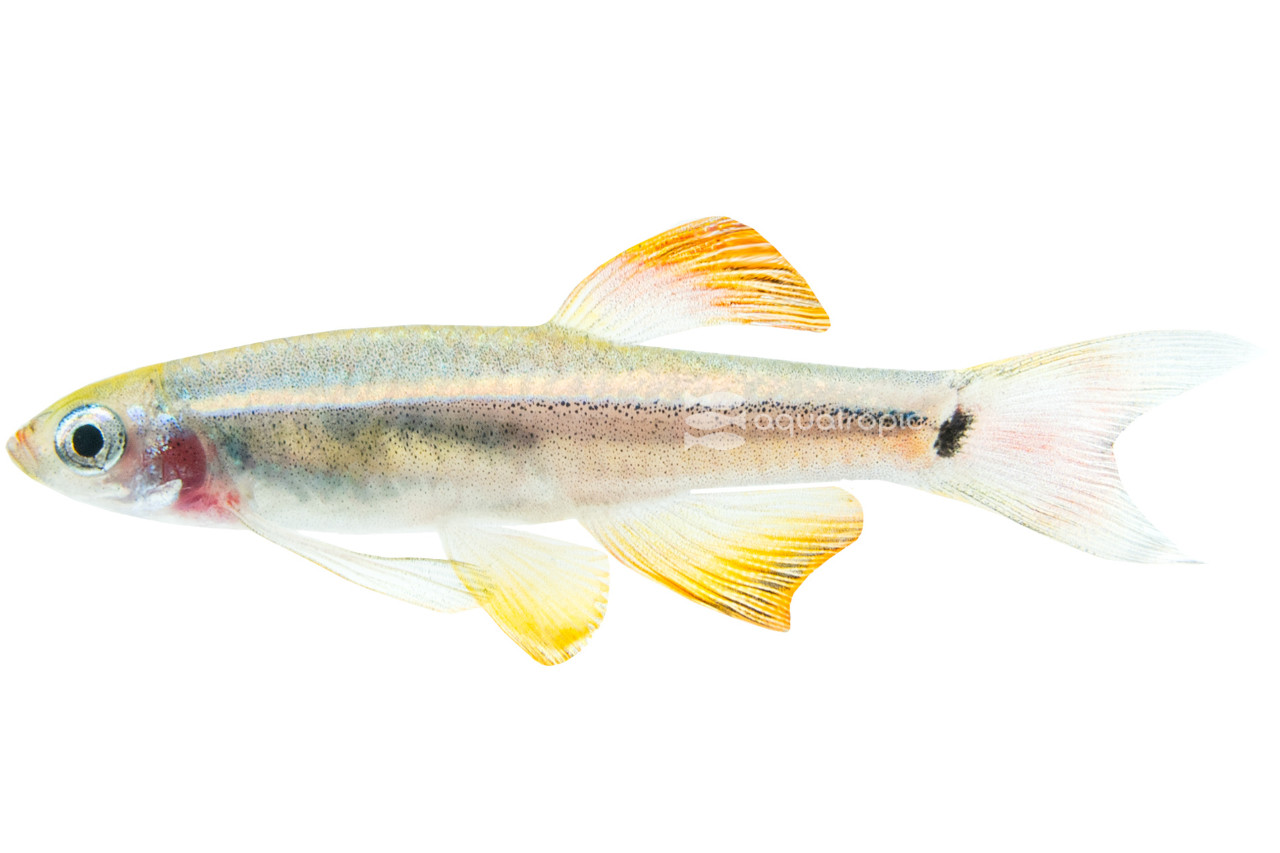
Tanichthys micagemmae has an interesting name. The first person to catalog a fish in this genus was a Chinese Boy Scout Leader named Tan Kan Fei, and the genus is named for him: Tan Ichthys (which is Greek and roughly translated means “fish”. Micagemmae has Latin roots and is loosely, “sparkle jewel.” This sparkly jewel theme carries into its many common names; it is often (and aptly) called the Jewel Minnow, as well as Sparkle Minnow, Sparkle Eye Minnow, Micagemmae Minnow, Royal White Cloud, Blue White Cloud, Vietnamese White Cloud, and its most common moniker here in the US, Dwarf Cardinal Minnow (and sometimes Dwarf Cardinal White Cloud).
They are indeed a Sparkly Jewel and a Dwarf. These fish are gorgeous, peaceful and SMALL. Full grown adults are about an inch long (give or take a tenth). This means you can (and definitely should) put lots of them in an aquarium, even a fairly small one. A well planned ten-gallon tank could house a dozen of these, and that's good, because while you can keep less, they do best in groups of 12 and up. They'll be bolder, show better color and higher activity levels when kept in larger groups.
As far as we know (as of the writing of this article) they are only found in one river system in Vietnam; The Ben Hai River and its tributaries. The location in the river where they were discovered is fairly quickly moving, and sandy bottomed, though these minnows tend to like protected areas of it. The water is clear and clean, and slightly cool. The Dwarf Cardinal Minnows will be fine in normal tropical tank temperatures 70-80 or so but could also be kept in slightly cooler water without negative effect. They show their best colors over dark substrate, and in aquariums that offer plenty of cover, like densely planted tanks. Though they will also do well in hill stream style displays with lots of flow and rocks.
Water should be fairly neutral in profile. Dwarf Cards don't seem much affected by hardness or pH levels as long as they fall within reasonable boundaries. Nitrates should be kept under 25ppm to keep stress down and colors up.
Speaking of color, did we mention these fish are gorgeous? Males are silvery with a black stripe running down their side, along a neon greenish blue one and a fine pastel-ish orange one. They'll develop a red spot on their nose, as well as red anal and tail fins (some will get reddish pectorals as well.) Females will share many of these traits but be slightly more subdued with the red and larger overall. When young, they can be difficult to sex.
Luckily, if you're interested in breeding them, you won't really need much luck or experience sexing them. If you start with a big enough group (remember what we said about groups), good cover and a low level of predation, you'll just start seeing babies in the tank and you'll soon have a whole run of sizes as successful broods start to stack up. If you want to take more care than this and start breeding them intentionally, you can still do so starting with a group. Dwarf Cardinal Minnows are egg scatterers and don't take care of the babies. The more cover there is for the eggs and the fry, the better your success rate will be. Often people will use small netting, or grasses / mosses for the eggs to fall into but that keeps the adults out. Well-fed adults aren't going to go looking to cannibalize the youth, but they're opportunists when it comes to protein. The eggs hatch in a few days, and the babies are (predictably) really small, and will probably require microscopic foods (we have articles elsewhere here on growing your own food). Juveniles like to hide in and around surface plants (and are probably eating biofilm off them), so it's worth adding some floaters to your planted display if you want to encourage babies.
While feeding the juveniles in a fairly sterile breeding setup may offer some challenges, feeding the adults is quite easy. They'll take a variety of thawed foods easily, and here we feed them once a day with a mix of meaty foods from Gamma that are appropriately sized for such small fish. Things like Mini Bloodworms, Brine Plus Omega 3, Tubifex, Rotifers, Cyclops, Daphnia, and White Mosquito Larvae all make great choices. We also like to give them the Nutramar Freshwater Complete Crumbles, which delivers the same trusted nutritional value and protein density of the pellets, but leaves a nicely varied bite size in the water for all the fish that are too small to take pellets.
These little minnows are ultra peaceful and very adaptable, and so are good options for community tanks with other peaceful fish that won't eat them. Smaller Tetras, Guppies, Mollies and other Livebearers, peaceful dwarf Cichlids, Otos or Synos etc. Or maybe you're thinking about going the Hillstream route with some higher flow, river rocks, all full of Red Dwarf Cardinal Minnows with Loaches and Danios etc. and this has great possibilities as well.
There is literally, and figuratively, nothing we can come up with against this fish. Gorgeous? Check. Active? Check. Small? Check. Schooling? Check. Reasonably priced? Check check check! Available aquacultured? Also check. This last one is important. Wild specimens are still easily available, but as these fish only come from one river system, and much of that river system is diverted for agriculture, and development, those wild populations could come under strain from habitat loss. For now, we offer both, but unless you are starting a breeding program, (which we support and applaud) consider getting aquacultured specimens which are just as hardy, easy, and gorgeous as their wild counterparts. Regardless of what you choose, the Jewel of the Ben Hai should have a place in your aquarium. As your Local Fish Store about getting you a dozen from Aquatropic today!