Son Of a Bichir
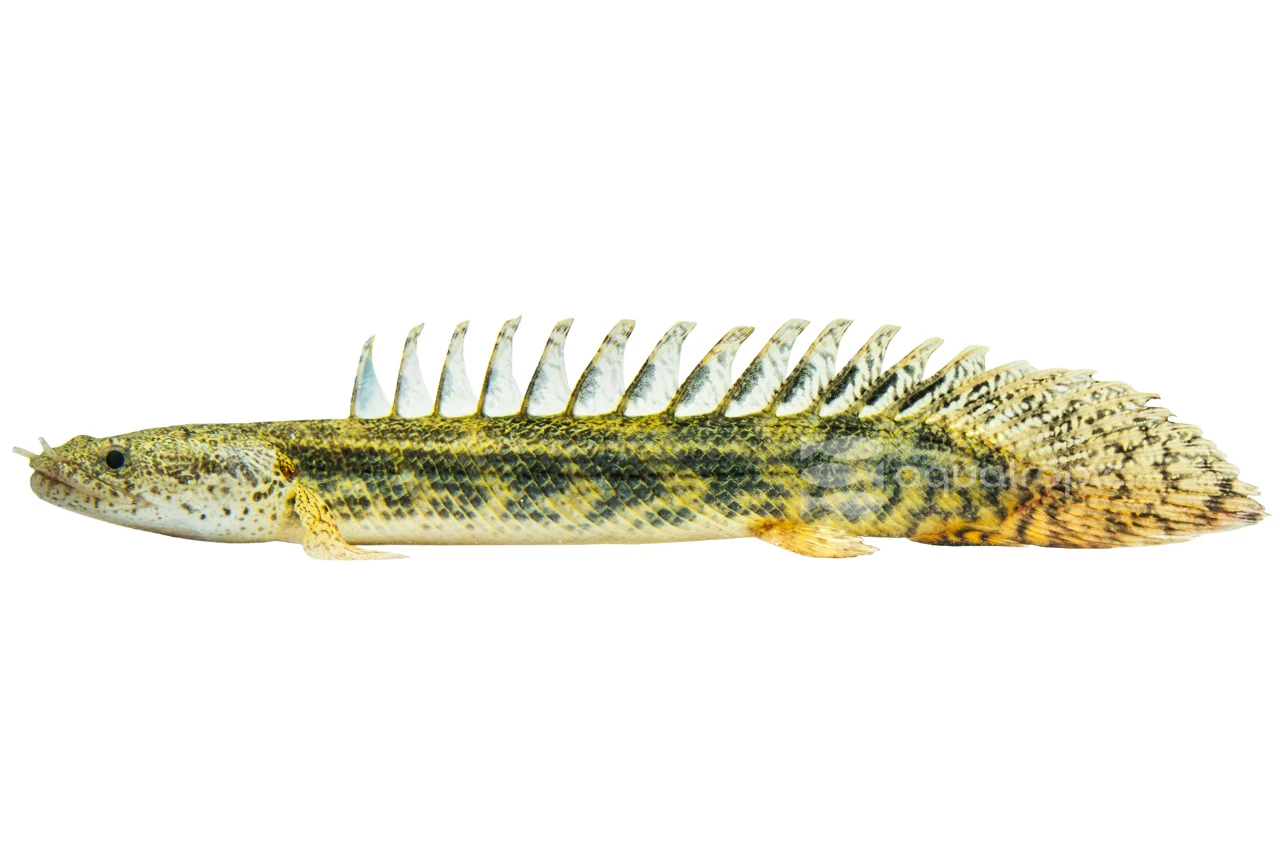
Every so often a species comes into the building that stops everything, and everyone goes to check it out. We see a lot of cool fish too, so it takes something quite special for this to happen. Polypterus ansorgii, the Guinea Bichir, is one of those fish. We don't see them all that often, and so you probably see them even less. It also often gets called the Ansorgii Bichir and occasionally the Thorny Eel. Dragon-like, ancient, and frankly enormous once it settles in, this is a species we don't get to work with often, and every time we do, we're reminded why serious Bichir keepers chase this one down.
Bichirs as a group are quite literally living fossils. The Polypteridae trace back through the fossil record to the late Cretaceous, when dinosaurs still walked the earth, and the family hasn't really changed all that much. They're airbreathers, using a primitive lung alongside their gills to survive in low-oxygen, stagnant water. No really. You might even catch them resting out of the water in your own aquariums. Juveniles sport external gills reminiscent of salamander larvae. Add the cylindrical, armor-scaled body and the row of separate triangular dorsal finlets running down the back (Polypterus literally means "many-finned"), and you end up with a fish that looks like it swam straight out of a natural history museum display.
Polypterus ansorgii belongs to the "lower jaw" group of Bichirs, alongside P. bichir and P. endlicheri. In these species the lower jaw is longer than the upper, so the mouth opens upward rather than down. This seems like real fish geek nuance (ok, it kinda is), but it also changes their hunting strategy. Lower-jaw Bichirs are built to take live, free-swimming prey rather than scavenge off the bottom, and they're noticeably more active and confident than their upper-jaw cousins as a result. Unlike the racing stripes of the much more common Polypterus Bichir, Ansorgiis wear a military camo inspired spotted pattern.
Behaviorally, this is a shy, deliberate predator. Bichirs can't see jack squat, and as a result, Ansorgis hunt mostly by scent, following an odor trail and striking once prey is nearly within reach. They move deliberately, almost sluggish, and then, WHAM! They can explode into movement and can open their mouths to nearly the width of their own body to swallow prey most fish that size wouldn't attempt. Diet for Guinean Bichirs is straightforward. In the wild, they eat insect larvae, fish crustaceans, and amphibians, hell they'd probably eat lizards and rodents too if given the opportunity. In our system we mirror that with a rotation of thawed foods from Gamma. Chopped Prawn, Chopped Mussel, Whole fish for larger specimens. Smaller fish need a varied diet too but look for a manageable bite size. In your aquarium they'll probably love the opportunity for some live food. Earthworms are a favorite, and if you have a good, clean source of guppies, goldfish or other feeders, go for it. Just make sure those fish are well fed (immediately) before feeding them to the Bichirs.
New arrivals, and juveniles especially, spend a lot of time hovering at the surface, or even climbing out onto some driftwood or plants to sit. It seems weird but is pretty normal activity. These fish can live for days outside the water in humid environments. It's also an instinct: small Bichirs are most vulnerable to predators during the trip from the bottom to the surface for air, so they simply station themselves near the top until they feel secure. A tank with floating plants or wood to rest against / on goes a long way toward settling a new fish faster. As they get settled in, they'll spend far more time cruising and foraging along the bottom.
Bichirs are notorious jumpers and you'll need a tightly fastened lid to keep them in your aquarium (they can push open loose lids). They also occasionally rocket up to the top of the water for a breath of air, and if your top isn't on tight, they can launch right out of the aquarium. If you're looking for other fish to keep them with, you should stock Guinean Bichirs alongside similarly sized, non-aggressive companions. Fish that are small enough to fit in a Bichir's mouth, sooner or later will fit into a Bichir's mouth. We always plan tankmates around that mouth, and around the fish's calm demeanor. Aggressive fish and fin nippers will damage your Bichir and force it into hiding.
As far as we know, Polypterus ansorgii is rarely bred in captivity, and this is a relatively recent development (a major draw for some of you). Breeding in other Polypterus is triggered by simulated seasonal changes, mimicking the temperature and water composition shifts of the rainy season, and there's no reason to think Ansorgii Bichirs won't respond the same way given the opportunity. Whoever manages it will have a major accomplishment under your belts.
Part of what makes Guinean Bichirs special is how hard they are to come by. Their natural range is restricted to a small area within Guinea, with a few reports of it out of Nigeria, and while aquacultured specimens are becoming more common, they still aren't a fish you'll see very often. Polypterus ansorgii isn't a fish for a first tank, and it needs a really big home at adulthood. That said, for keepers with space, patience, and an appreciation for something that's barely changed in millions of years, keeping Polypterus ansorgii is as rewarding as freshwater fishkeeping gets. Ask your local fish store about getting you one from Aquatropic today!