Put What Where Now?
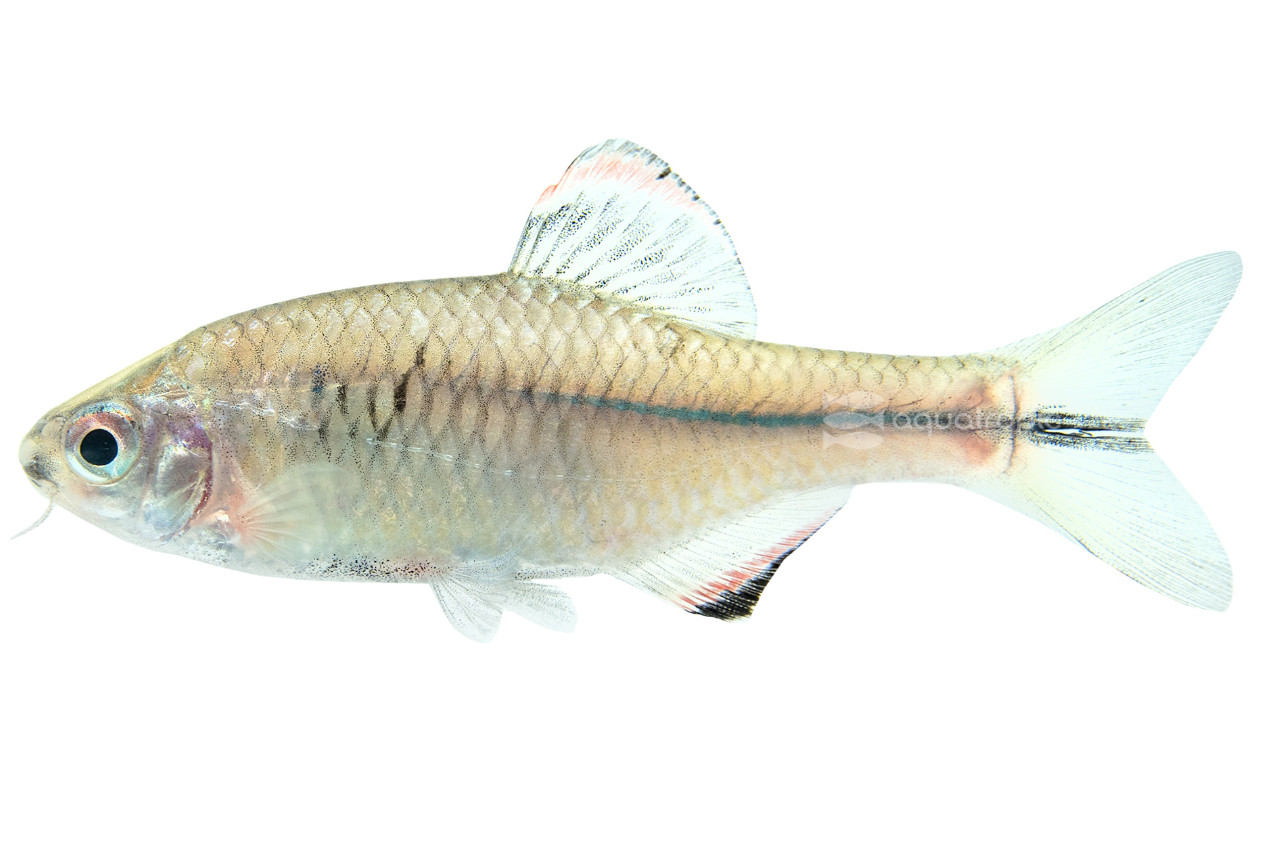
Paratanakia himantegus is our scientific name tongue twister of the week. It's also one of those fish that sounds like it should be intimidating and is actually anything but. Better known as the Taiwan Blue Amur Bitterling, or sometimes the Chinese Bitterling or China Pinkfin, this little cyprinid hails from somewhat cool streams and rivers across China and Taiwan, and it's exactly the kind of underappreciated gem we relish pointing people toward. They're small, topping out around three inches, with a silvery-blue body that flashes hints of iridescence and fins that pick up rosy, pink to red tones, especially on the males when they're feeling good about themselves. It's not a flashy showpiece in the way a Betta or a Discus is, but in the right setup, in the right light, a shoal of these moving together is honestly mesmerizing.
Here's the thing about bitterlings that sets them apart from basically every other small schooling fish you'll consider for your tank: their reproduction is tied directly to freshwater mussels. Female bitterlings develop a long ovipositor and use it to deposit their eggs inside the gills of a living mussel, where the eggs develop safely until the fry are ready to leave. It's a genuinely wild bit of natural history, and it's part of why these fish have such a following among biotope enthusiasts. You don't need a mussel in the tank to keep this species happily, but if breeding is your goal, it becomes the whole ballgame, and that's a rabbit hole worth going down.
For a basic setup, think spacious and mature rather than tall and cramped. A 20-to-29-gallon aquarium with a long footprint is a great starting point for a group, and honestly, more floor space will always serve this species better than more height. These are shoaling fish through and through, so don't even think about keeping fewer than six, and eight to ten will make for a much more natural, much more active display where you actually get to see their social dynamics play out. Filtration should be strong and the water well-oxygenated, since these fish come from flowing streams and rivers rather than still ponds. A bit of extra current from a powerhead won't hurt and will actually encourage more natural behavior.
Temperature is where this species diverges from the typical tropical community fish, and it's worth paying attention to. Taiwan Bitterlings are subtropical to temperate, and they genuinely appreciate a cooler existence, doing best somewhere in the 61-to-75-degree Fahrenheit range. This means at the high end of the range, it can be mixed with most tropical aquarium fish, at the low end of the range, a huge shoal could look great in your Koi pond (another great addition to last week’s article!) Many keepers run this species without a heater at all, especially if their home (or dream fish room) stays cool through part of the year. Some Taiwan Blue Amur Bitterling keepers will even give their fish a deliberate cooler rest period over winter, mimicking the seasonal shift they'd experience in the wild, usually as a breeding trigger. Water chemistry is fairly forgiving, with a preference for neutral to slightly alkaline conditions, somewhere around pH 7 to 8.5, and moderately hard water suits them well.
When it comes to feeding, Taiwan Bitterlings are the picture of unfussy omnivores, and that makes them easy to keep well-nourished and looking their best. A quality staple diet matters here, and we'd point you toward Nutramar's freshwater lineup as a daily base, since it's built around genuinely balanced nutrition rather than just filler. These fish would do well on both the Freshwater Algae and Color Plus as well as the Freshwater Complete. Gamma's frozen line is also a great fit for a fish this size, and Brine Shrimp Plus Spirulina, Daphnia, Cyclops and Mysis are all excellent choices that these fish will eagerly pick through. Feeding a varied diet also tends to bring out better breeding condition if you're hoping to try your hand at that mussel-dependent spawning process down the line.
As for tankmates, Taiwan Bitterlings are genuinely peaceful and mix well with other small fish that enjoy similarly cool, well-oxygenated water. Danios are a natural fit, as are various minnows and barbs. White Cloud Mountain Minnows share a similar temperature preference and make for an excellent companion species in a cooler setup. If you want to lean into the biotope angle, Stiphodon and Rhinogobius gobies are both native to the same general region and bring their own personality to the display, grazing on algae and biofilm while the Taiwan Blues shoal in open water above them. The one thing to steer clear of is long-finned tankmates, since bitterlings have been known to take the occasional nip at trailing fins, so save the fancy Guppies and long-finned Bettas for a different tank.
On the aquascaping side, this species rewards a display built around a temperate stream or river theme rather than a lush tropical jungle look. Smooth, water-worn stones and well-seasoned driftwood create the right structure, and a bit of open swimming space in the middle of the tank lets the shoal show off its schooling behavior. They'll do well in planted setups; Vallisneria, Cryptocoryne, Java Fern, and Anubias all work well and tolerate the cooler temperatures this species prefers.
For invertebrates, this is where the mussel question comes back into play if breeding is on your radar, since a healthy freshwater mussel, kept in appropriate conditions of its own, is essential to that process. Outside of breeding ambitions, nerite snails make a great low-maintenance cleanup crew that won't bother anyone, and larger shrimp species like Amano shrimp generally do fine alongside bitterlings, though very small shrimp fry are fair game if the bitterlings are hungry enough.
Taiwan Blue Amur Bitterlings aren't a fish you'll find in most big box pet stores, but they're absolutely worth seeking out if you want something a little different for your aquarium and your LFS can get you a school of a dozen or more from us here at Aquatropic. These active, easy-to-feed fish are genuinely social, and they come with one of the more fascinating reproductive strategies in the freshwater hobby. Track some down, give them the cooler water and the open swimming room they're asking for, and you'll have a shoal that earns its keep as a display fish every single day.