Little Big Shrimp
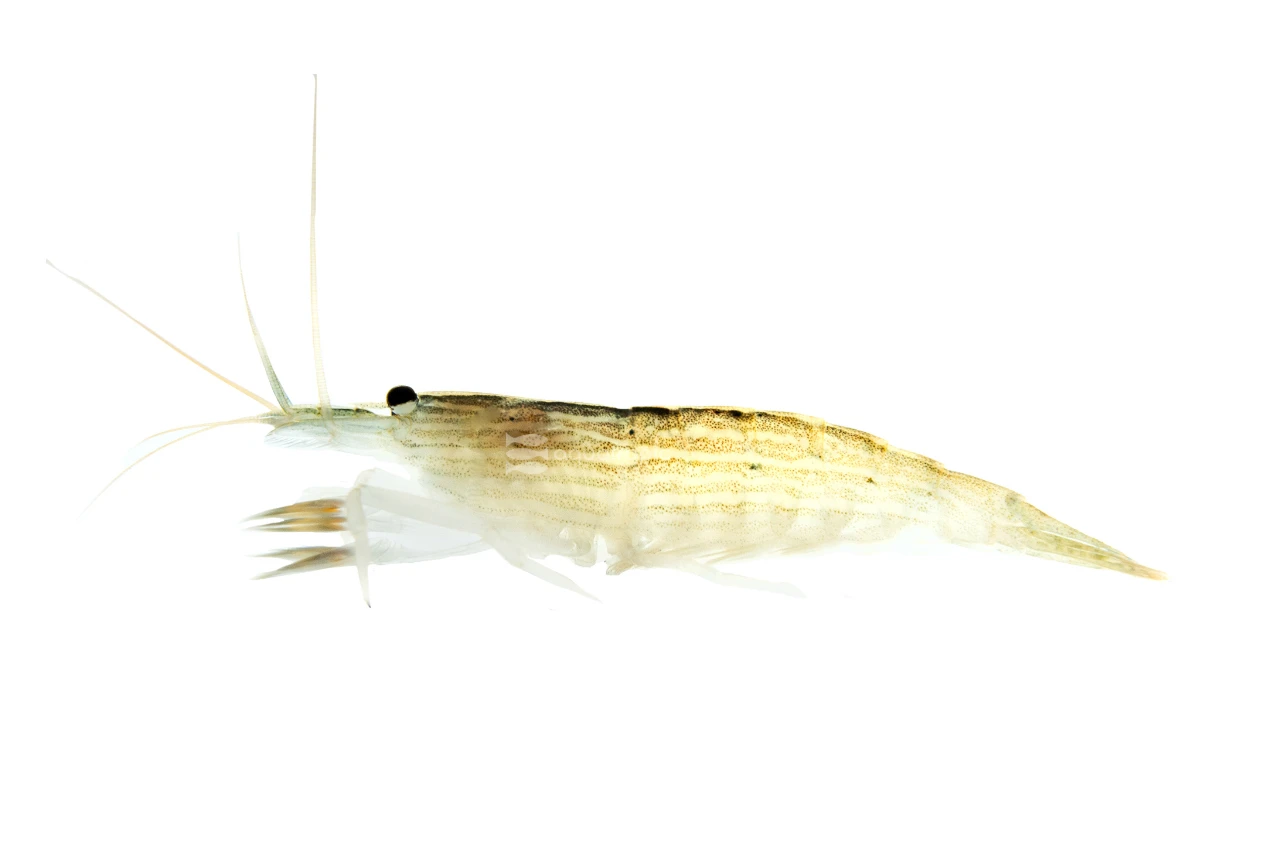
Atyopsis spinipes has an identity problem, and we hear about it at Aquatropic pretty frequently. Depending on who you ask, this is a Dwarf Bamboo Shrimp, a Singapore Flower Shrimp, a Thornfoot Mountain Water Shrimp, a Soldier Brush Shrimp, a Fan Shrimp, a Wood Shrimp, or an Asian Filter-Feeding Shrimp. That's before you get to the plain old Bamboo Shrimp label that gets slapped on anything with a pair of feeding fans. Here at Aquatropic we use Dwarf Bamboo Spinipes Shrimp, but we'd rather you remember the scientific name which is why we use the species name in the common name. So many of those other common names are shared between multiple species that the binomial is the only way to be sure what you're actually bringing home.
Call it what you will but this is one of the most entertaining invertebrates in freshwater aquaria. With a maximum size of just about three inches, it's (counter intuitively) also one of the largest decorative shrimps you can keep. It lives in the moving water of clean streams across the Philippines and the western Pacific, where it perches on rocks and wood with its fans held out into the current. Those fans are modified front legs lined with fine bristles, and the shrimp uses them to comb plankton, bacteria and fine organic particles out of the water. Watching a healthy one sit in the flow, fans open like tiny catcher's mitts, is something totally different than usual when it comes to Shrimp keeping. Their color shifts with mood, surroundings and molt cycle, running from mottled tan or creme and brown to deep red, and many turn bright red right after shedding. Don't judge one by its color on any given day.
Differentiating this shrimp from its relatives is easier than most hobbyists expect, because the genus is tiny. Only two species are recognized in Atyopsis: A. spinipes and its look-alike cousin A. moluccensis, the “true” Bamboo Shrimp. They share the same care, the same fans, and nearly the same coloration, and (as referenced) both are regularly sold under the same pile of common names. The most reliable way to tell them apart is to look at the rostrum, which is the pointed projection between the eyes. Count the small teeth along its underside. A. spinipes carries a modest 2 to 6 teeth, while A. moluccensis has a noticeably more serrated 7 to 16. Males also differ in the proportions of the first pleopod, but that takes a microscope and a lot of patience. Range helps too, since A. moluccensis is a Greater Sunda Islands species, while A. spinipes comes from farther east. If your shrimp is dramatically larger, with a heavier, more sculpted look, you may be dealing with a Vampire Shrimp (Atya gabonensis), which is a different genus entirely.
For tank size, we recommend at least a 20-gallon aquarium for one or two shrimp, and 30 gallons or more if you want a small group, which we think is the best way to go. They don't form pair bonds and they're peaceful with each other, but they use a lot of surface area, and a bigger footprint gives each shrimp its own perch. A mature tank matters more than size alone. A tank that's been running for months will have the biofilm and microfauna drifting around that these shrimp live on, and a brand-new tank simply won't feed them as effectively. We've seen too many newly set up systems with fan shrimp that fail to thrive while the keeper wonders what's wrong.
Water chemistry is actually quite forgiving as long as it's stable and clean. Aim for a temperature between 72 and 80°F, a pH around 6.5 to 7.5, and moderate hardness. Soft water works, but they need enough minerals to molt properly. Oxygenation and flow are the real priorities, because these shrimp come from moving water. Keep ammonia and nitrite at zero, keep nitrate low, and AVOID copper entirely. (Likely sources include fish medications, plant fertilizers and algae treatments.) Acclimate all Shrimp slowly, ideally by drip over an hour or more.
Aquascaping should work with their natural behavior. Give them hardscape to climb on and plenty of perches positioned where the current from your filter or powerhead sweeps past, such as driftwood, smooth river rock and stacked slate. Ecoscape's Monument Rock series is a perfect fit for a river shrimp display. The Dwarf Bamboo Spinipes will pick a spot and return to it day after day if they like it enough. Add plenty of caves and shaded crevices since a shrimp that's about to molt wants somewhere safe to hide while its new shell hardens. Java fern, Anubias and mosses attached to woodwork well in higher current environments if you're looking to add some plants. Fine sand or smooth gravel is gentler on their legs than anything sharp. Cover your intakes with sponge or fine mesh so nothing gets pulled in, and lid the tank, because a startled shrimp can and will leave the water.
Tankmates should come from the peaceful end of the pool. Small Rasboras, peaceful Tetras, Corydoras, Otocinclus, small Livebearers, and dwarf Gouramis all make good neighbors, and so do snails and other non-aggressive Shrimp. Anything large enough to swallow a three-inch shrimp is a risk, and so is anything that hunts. That means avoiding big cichlids, many loaches, large barbs etc, and most predatory fish will turn an unlucky molting shrimp turn into a snack. The best tank for them has calm swimmers in the upper water column, which leaves the shrimp undisturbed at the rocks and wood below.
Feeding is where many keepers go wrong because these shrimp can't graze algae the way a Neocaridina can. They need fine particles in the water column, which you have to supply in aquariums without enough natural food. Finely powdered foods like Nutramar Freshwater Algae and Color Plus Crumbles are perfect, just make sure you crumble it really fine. You can also use liquid fry foods like the liquid and finer pieces from Gamma Daphnia, Rotifers and Cyclops suspended in liquid. A handful of small feedings through the week is better than one big one. Target feed by squirting food into the flow near their perch. A healthy shrimp will wave its fans eagerly, and if it's pressed against the bottom hunting for scraps, it's probably hungry.
Breeding these shrimp is where the story gets interesting / difficult, and as a result most of the species you find in your local fish store are wild caught. A. spinipes is amphidromous, meaning adults live in freshwater streams but the larvae need to reach brackish or marine water to develop. In captivity, a mature female carries a cluster of tiny eggs under her tail for roughly four weeks. When they hatch, the larvae are released into the water, and in a freshwater display they typically don't survive. Anyone who wants to raise them has to catch the larvae and move them to a separate brackish setup. They then need microscopic food such as phytoplankton and rotifers, gentle aeration and clean water. The larval stage is long and delicate, and only after the young settle into postlarvae can you slowly acclimate them back to freshwater. Few hobbyists ever succeed, but it's a fascinating project for the advanced and dedicated aquarium enthusiast and berried females are a good sign that your shrimp are happy.
Give these Shrimp a mature tank, good flow, clean water and gentle neighbors, and you'll get a real character in return. Ask your local fish store for some Dwarf Bamboo Spinipes Shrimp but really say the words “Atyopsis spinipes” from Aquatropic, to make sure you get the right one!