Highly Underrated Fish - Günther's Mouthbrooder
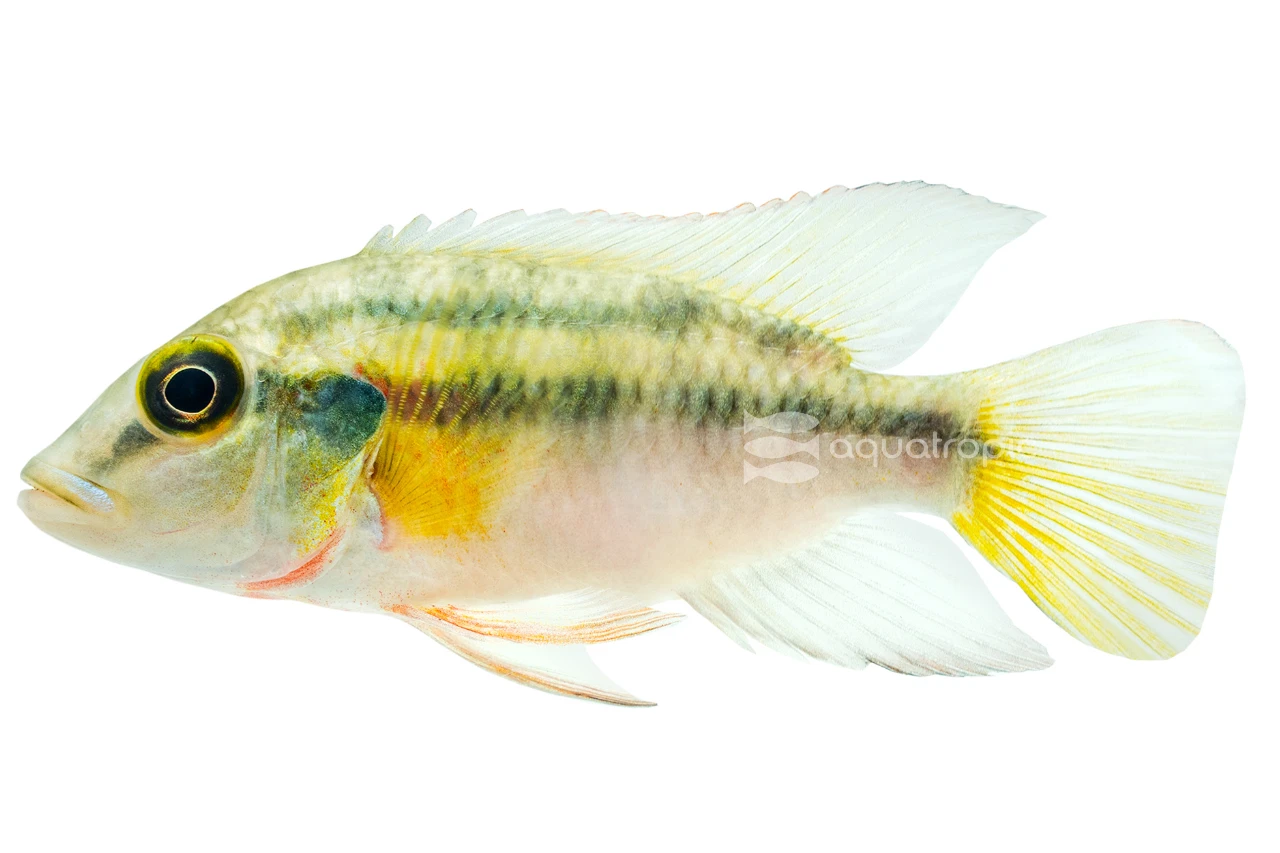
By now, the longtime readers here know we love a just plain cool fish, especially the ones that don't need to shout to earn their place in the aquarium. Chromidotilapia guntheri doesn't have the neon intensity of a Lake Malawi mbuna or the size of an Oscar, but it has something many of its showier cousins lack: they are quite devoted parents and will happily show you every step of the process if you set the stage correctly. If you've been looking for a different Cichlid that rewards patience and good husbandry with real, watchable family life, this is your fish.
Most aquarists know this fish as Günther's Mouthbrooder (which is what we call it in house) and you'll see it spelled Guenther's Mouthbrooder just as often, since the umlaut tends to get lost in translation. Günther's Cichlid is common shorthand, and in the German-speaking hobby it goes by Günthers Prachtbuntbarsch. The species name is spelled guntheri in the original description and guentheri in many later references, and you'll find both on tank labels. It got this name from the French zoologist Henri-Émile Sauvage, who described the species in 1882 from material collected around Assinie on the coast of what is now Côte d'Ivoire. He named it for Albert Günther, the German-born British zoologist who spent decades at the British Museum (Natural History) and described an enormous number of fish, reptiles, and amphibians.
In the wild, Günther's Mouthbrooders range through coastal basins from Liberia to Cameroon and Equatorial Guinea, and they've also been recorded in the Niger and Benue systems. They favor slow or still lowland waters with plenty of submerged roots and fallen branches, and they spend their days working over the bottom like a tiny Geophagus, taking mouthfuls of sand, sifting out whatever is edible, and expelling the rest through the gills. That sand-sifting habit shapes nearly everything about how you should set up their home.
For size, plan on a pair that matures into a fish bigger than most people expect. Males can reach six or seven (rarely even eight) inches, while females stay noticeably smaller at around four or five. We recommend a minimum of 55 gallons for a single pair, and honestly, we'd rather see a 75 gallon or larger, especially if you want to keep a small group and let pairs form naturally (something we thoroughly recommend). A longer footprint is more useful than a taller tank, since these fish live on the bottom third of the aquarium and care little for the water above their backs.
Water chemistry for Günther's Mouthbrooders is quite forgiving. These fish tolerate a wide pH range, anywhere from about 6.0 to 8.0, and a hardness range of roughly 5 to 19 dGH. That said, if you want something to aim for, use soft to moderately hard water with a pH near neutral. Keep the temperature between 76 and 80 degrees Fahrenheit and push toward the warmer end when you're trying to coax a pair into spawning. What matters far more than hitting a specific number is stability. Moderate filtration is plenty in your tank, and flow can / should also be fairly sedate.
These are fish from warm, tannin-tinted, slow-moving water. Start with a sand substrate at least two or three inches deep. Skip gravel and sharp aggregate, because a fish that sifts all day is not going to show its best with coarse substrate. Add driftwood, branches, and root structure, which are the heart of this fish's natural habitat. Ecoscape wood and rock make an excellent foundation here. Stack some flat Graphite Slate pieces from the Biotope series or some Red Slate from the Canyon Rock series to create caves and level surfaces and arrange the layout to break up lines of sight so a pair can claim a territory without constantly arguing with their neighbors. You want enough open space for them to be able to do the work they were hatched to do. Plants are a bonus rather than a necessity. A sifting Cichlid will uproot anything planted (toot sweet), so stick with tough, attachable species like Anubias and Java Fern tied to wood, and don't be surprised if a delicate stem plant doesn't survive the first week.
As is the case with many African Cichlids, feeding is easy. These are omnivores, so offer a varied diet. Nutramar sinking pellets make a great staple that takes the guesswork out of nutrition, and rotating in Gamma frozen foods such as Mysis, Brine Plus and other meaty offerings keeps them in prime condition and brings out their best color. Small portions a couple of times a day let them do what they love, which is hunting through the sand for every last crumb.
Now, the part we get genuinely excited about. Breeding Chromidotilapia guntheri in a home aquarium is within reach of a dedicated hobbyist, and it's the reason we think this species deserves far more attention than it gets. They are substrate spawners; a pair will clean a flat surface, often a rock, a slab of slate, or a piece of wood, and the eggs are laid out in the open before the parents gather them into their mouths. Here's where it gets interesting. It was thought that only the male carried the eggs, but more recent works indicate that care of the brood is shared, with both parents involved in protecting the young after hatching. Exactly how the mouthbrooding duties split up can vary from pair to pair, and that variability is part of what makes watching them so rewarding.
The best way to get a pair is the same way you'd get any pair-bonding Cichlid: start with a group of young fish, give them room, and let them sort the pairing out themselves. Once a pair forms, they'll claim a territory and become noticeably more protective, so if you want to maximize your chances, you should strongly consider separating them into their own breeding tank with a sponge filter, flat spawning surfaces, and plenty of cover. Keep the water clean and a little warmer than usual, feed a tad more generously with high-quality foods, and give them time. When the fry finally emerge, the parents will guard them closely for a month or more, and watching a pair shepherd a cloud of tiny Cichlids across the sand bed is the kind of thing that turns a casual fish keeper into a lifelong Cichlid person.
A single pair are happiest as the stars of their own tank, and that's the setup we'd suggest if breeding is your goal. That said, if you want a community, think peaceful to moderately robust fish that stay in the middle and upper water column. Larger African characins like Congo Tetras are a natural fit, as are active West African Killifish and bottom dwelling catfish such as Synodontis that won't compete for the same sand and spawning sites. Steer clear of other substrate hugging Cichlids with a similar shape and attitude, because two territorial sifters in the same tank is going to take a lot of space. Also avoid anything small enough to be eaten and remember that a pair with fry will become protective and a little pushy, so a roomy tank and a few well-placed barriers go a long way. A secure lid is a smart idea.
All told, Günther's Mouthbrooders are fish that ask for a sandy floor, some wood, stable water, maybe a touch of stain and a bit of patience, and in return gives you behavior you rarely see from the average community fish. It is one of the great underappreciated West African Cichlids, and a perfect fit for the aquarist who wants a project that goes beyond the usual. If you're ready to try your hand at raising one of the most dedicated parents in the freshwater hobby, ask your local fish store to get you a group of Chromidotilapia guntheri from Aquatropic today.