Head to the Bar
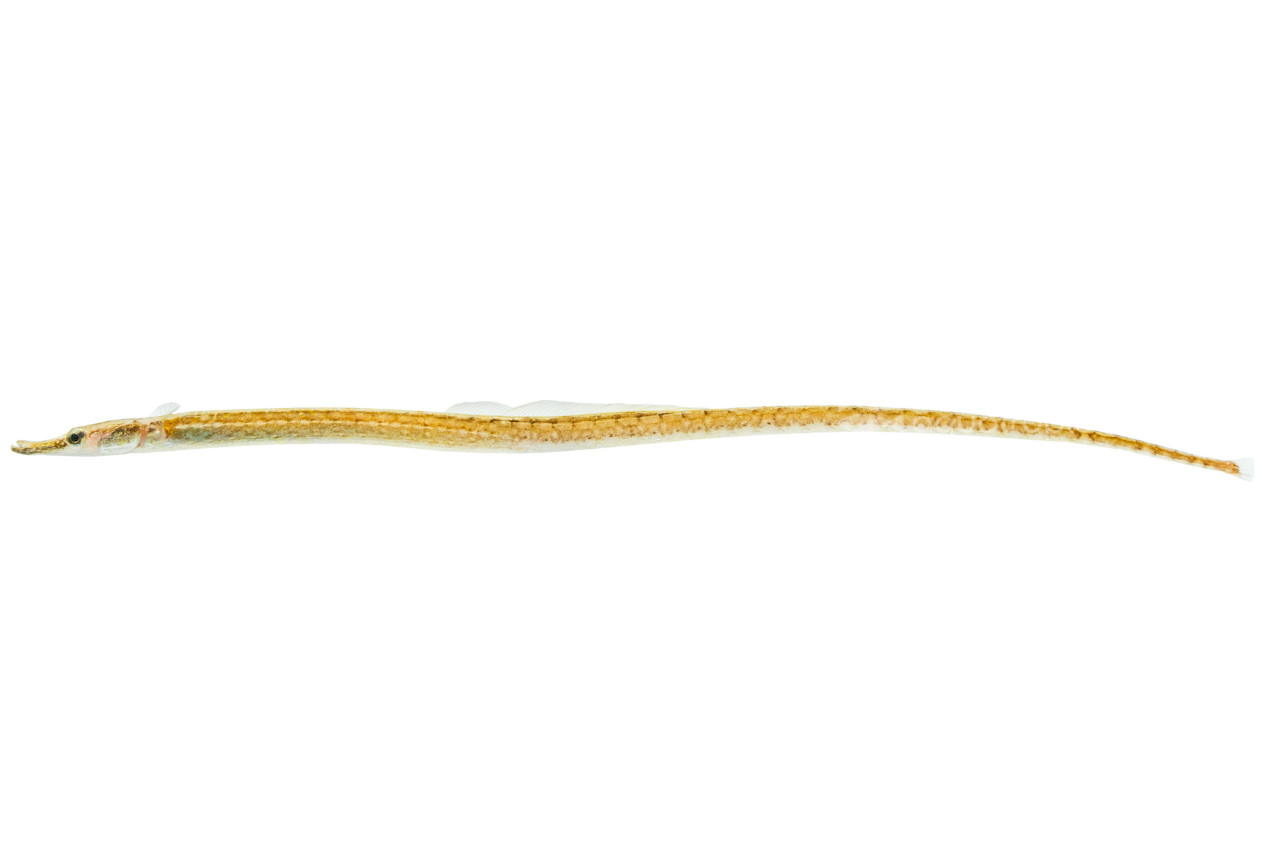
Today's biology term is amphidromus. It is defined as the ability to move between fresh and saltwater (and the in-between brackish) but not for the purpose of reproduction. Take for example the example of the Barhead Pipefish (Microphis leiaspis). This predominantly freshwater pipefish starts life out with a vacation to the ocean. Larvae are carried out to sea from the river or estuary they live in where they develop for months, returning to the river as itty-bitty fry to grow, live and later, reproduce themselves. We know that's a lot to unpack.
So, the thought that is on the top of your mind is that freshwater pipefish exist! Indeed, they do! They are among our favorite oddball fish to keep. They're endlessly interesting to watch and you can house them in pairs and small groups. You might also see them sold as Bud River Pipefish, but this is uncommon. To be honest, the fish itself is pretty uncommon. That life cycle makes them harder to aquaculture than many other pipefish, and so pretty much all of the specimens you see in your local fish store are going to be wild caught. Conversely, rarity breeds desirability, and all of us fish geeks love the challenge of breeding a fish that isn't commercially available yet! Here's another one for you to break new ground with.
All pipefish are fairly straightforward to keep but require a level of diligence that many hobbyists are not up for (or maybe just don't have the bandwidth). Good water quality and appropriate water chemistry is a must and where we'll start out. As wild caught specimens, these fish are going to do best in an environment that is at least vaguely like what they came from. Temps need to be in the range of 72-80, with a slightly alkaline pH between 7.0 and 8.0. They're not especially sensitive to hardness so unless your values are extreme in one way or another, you're probably okay. Nitrates should be kept under 25ppm, and ideally much lower, so keep up those water changes.
In regard to the display, these fish will get six to seven inches long (maybe a tad more, but that's unlikely). On the other hand, they're fairly sedate, so this means you could keep a couple of them in a 30-gallon aquarium and a small group in a 55. Their lackadaisical lifestyle requires flow that is on the gentle side. They do really well in planted aquariums, or tanks that are otherwise rich in cover (and food!) You need not cover these displays, Barhead Pipefish aren't going to jump / climb out.
You can keep them with other fish, as long as those fish are also very peaceful and just as importantly, sedate. You need fish that are basically going to ignore your Barheads, but you're also going to need fish that aren't going to out compete them for food, and with how slow the Pipefish swim, this is going to seriously limit your choices.
On that topic, feeding can be a challenge. It isn't hard, but a new fish might demand live food. In these cases, we always opt for Nutramar Artemia, and Artemia Nauplii. Those of you culturing your own food at home will find that even the pickiest Barhead Pipefish will also usually greedily take things like your own Artemia, Rotifers, Tubifex, and even guppy fry (use caution when feeding live fish, they should always be gut loaded, and from a trustable, clean source). Always feed these live foods alongside some thawed options from Gamma like Daphnia, Rotifers, Tubifex, Cycops, Brine Plus Omega, and for larger specimens, things like Mysis, Mini Bloodworms, and Mosquito Larvae. Over time you should be able to move away from live foods entirely (if you so choose). Whatever you decide to feed, you should do it at least twice a day, and as often as four or five times a day wouldn't hurt as long as you feeding small amounts. These fish are used to eating throughout the day, so emulate that as closely as you can!
You know we love us some oddball fish around here, and who doesn't? The biggest issue most hobbyists run into keeping them is that a lot of the species of unique fish available in the hobby get quite large, making them achievable only to those of use with massive aquariums or freshwater / tropical ponds. The Barhead Pipefish dumps that assumption. Here is a total oddity, swimming along like a pencil, with the males carrying babies around and it all fits in a desktop size aquarium. Yes, they're a little more work than some other fish, but they're also a lot more reward! If this sounds like your aquarium of fish, then ask your LFS about getting you a couple from Aquatropic today!