Half The Beak, Twice the Cool
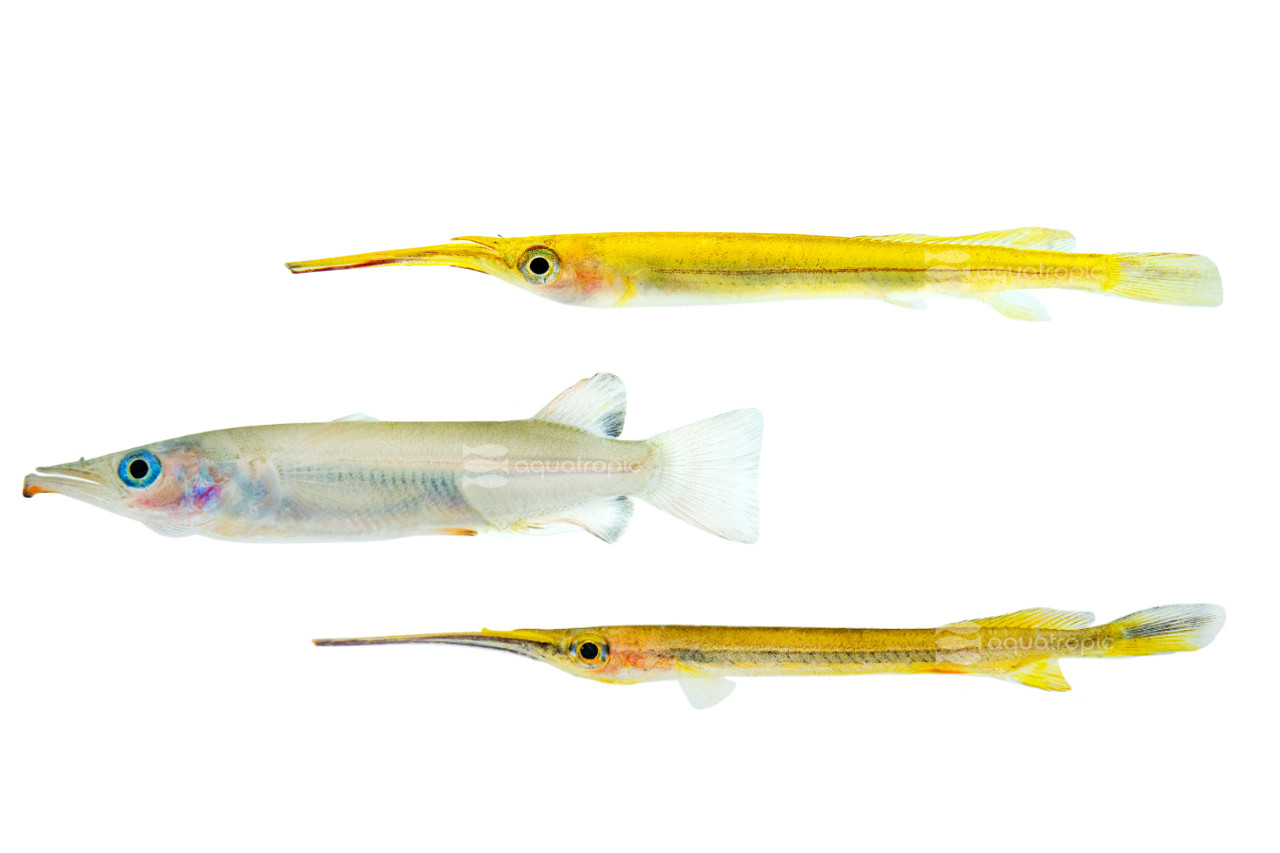
Have you ever seen a fish that looks like somebody ran out of parts halfway through the build and shipped it anyway? Yup, today we're talking about Halfbeaks. The lower jaw stretches into a slender, needle-like beak while the upper jaw stays short and stubby, and the whole animal hangs just under the surface like a tiny silver-green javelin waiting for something to fall from the sky. They are also some of the most entertaining freshwater fish we handle here at Aquatropic, and a great fit for aquarists who want something different from the usual suspects (nothing against them, of course).
Most Halfbeaks in the hobby fall into three groups. The Wrestling Halfbeak, Dermogenys pusilla, is likely the most common a makes a group unto itself: a three-inch fish from the estuaries, mangrove creeks and rice paddies of Southeast Asia that does well in a wide range of water conditions. The species earns its name from the males, who lock beaks and sumo each other around in slow-motion contests that look dramatic but rarely do real harm. The Sulawesi species in the genus Nomorhamphus, including the Celebes Halfbeak, mostly run a bit larger, often sport orange-red beak tips, and come from hard, alkaline water. Then there are the Hemirhamphodon, the Forest Halfbeaks of Borneo and the Malay Peninsula, which are slimmer, shyer, and at home in soft, tea-stained blackwater. Dermogenys and Nomorhamphus bear live young and in the right environment, happy Halfbeaks from these genus will reproduce without intervention.
On the topic of an aquarium for Halfbeaks, footprint always matters far more than volume. Halfbeaks will really only live in the top few inches of the water column which means that no matter how tall the tank is, they're really only going to use the very tippy top. In order to get them more room, you have to have a long or wide tank (or both!) For a group of Dermogenys we like a 20 gallon long as a starting point, and 30 gallons or more for a community. Nomorhamphus are bigger fish with bigger personalities, and we suggest a 40-gallon breeder or larger. Hemirhamphodon are happy in a 20 long, provided it's heavily planted and quite quiet. A tight lid is non-negotiable, because a startled Halfbeak will clear an open top, or slip through the gap around a filter intake, in an instant. Keep flow gentle and surface agitation low (they need to see their food)!
Water chemistry needs vary a bit between the groups; Dermogenys do well in hard, neutral to slightly alkaline water, and many keepers add a trace of marine salt mix to echo their estuary origins, though this is not necessary to keep them healthy. Nomorhamphus wants hard, alkaline, and well-oxygenated water. Hemirhamphodon prefers softer, slightly acidic conditions and shows their best color in a tank with a tannin tint. All the groups will do best with a stable temperature in the mid to upper 70s Fahrenheit.
Perhaps the most important part of planning a Halfbeak display is the group dynamic (and other tankmates). Males are scrappy with each other and relentless with females, so keep at least two or three females per male, and never bring home a lone pair. Six to eight fish in a long tank spread the attention out nicely and keeps the wrestling entertaining rather than stressful, and as is frequently the case, if you have the space, and maintain a good distribution, more is better. When thinking about tankmates, you already know that Halfbeaks claim the top of the tank, so choose fish that live in the middle and bottom. Harlequin Rasboras, Kuhli Loaches and small Corydoras are excellent company in Dermogenys and Hemirhamphodon setups, and Ricefish make a biotope-appropriate partner for a Sulawesi tank with Nomorhamphus. For a lightly brackish Dermogenys display, Bumblebee Gobies and Mollies fit right in. Avoid fin nippers like Tiger Barbs, large or boisterous fish that muscle in at feeding time, and nano fish like Boraras (Dwarf Rasboras) might look like lunch to a hungry Nomorhamphus.
Since we're on the topic of lunch, in the wild, Halfbeaks are primarily insect specialists, snapping at anything that lands on the surface, so they appreciate food offered right at the waterline. This means they're always pretty easy to feed. As you likely know by now, we use Nutramar in house because we think it's the best food made, and Nutramar Freshwater Complete Crumbles make a terrific staple. Feed small portions twice a day. The important part is that Halfbeaks don't look down for food, so you need to feed a little at a time and repeat. You don't want their food to get past them unless you have fish lower in the water column that needs food too. Around that staple, we rotate Gamma frozen foods, with Mysis, Copepods, Tubifex, White Mosquito Larvae and the Brine Shrimp Plus products are all great choices, thawed, drained and dropped on the surface. Gamma's blister and flat packs are gamma irradiated, which takes the pathogen and parasite worry off the table.
The single most important design decision is the surface itself. Halfbeaks feel secure under cover, so maybe lay down a canopy of floating plants with the dangling roots creating shaded lanes to hang in. Or perhaps lean into a lot of surface level driftwood. Always leave some open water for feeding. Below the canopy, think of the tank as a slow Southeast Asian stream: fine dark sand, a few pieces of driftwood (spiderwood and branch-style pieces from Ecoscape look fantastic), and a scatter of leaf litter for stain if you're going for a blackwater look. The dim light under the floaters brings out the color wash along the flanks of the fish.
Halfbeak displays reward planning more than almost any other freshwater group we handle. Give them room to run, a healthy ratio of females, a canopy of floating plants and a steady menu of Nutramar and Gamma, and you'll have a tank that's busy at the surface from the moment the lights come on. If you've been looking for a surface level fish that brings activity and interest, ask your Local Fish Store to get you some Halfbeaks from Aquatropic today.