Giant & Chocolate? Yes Please!
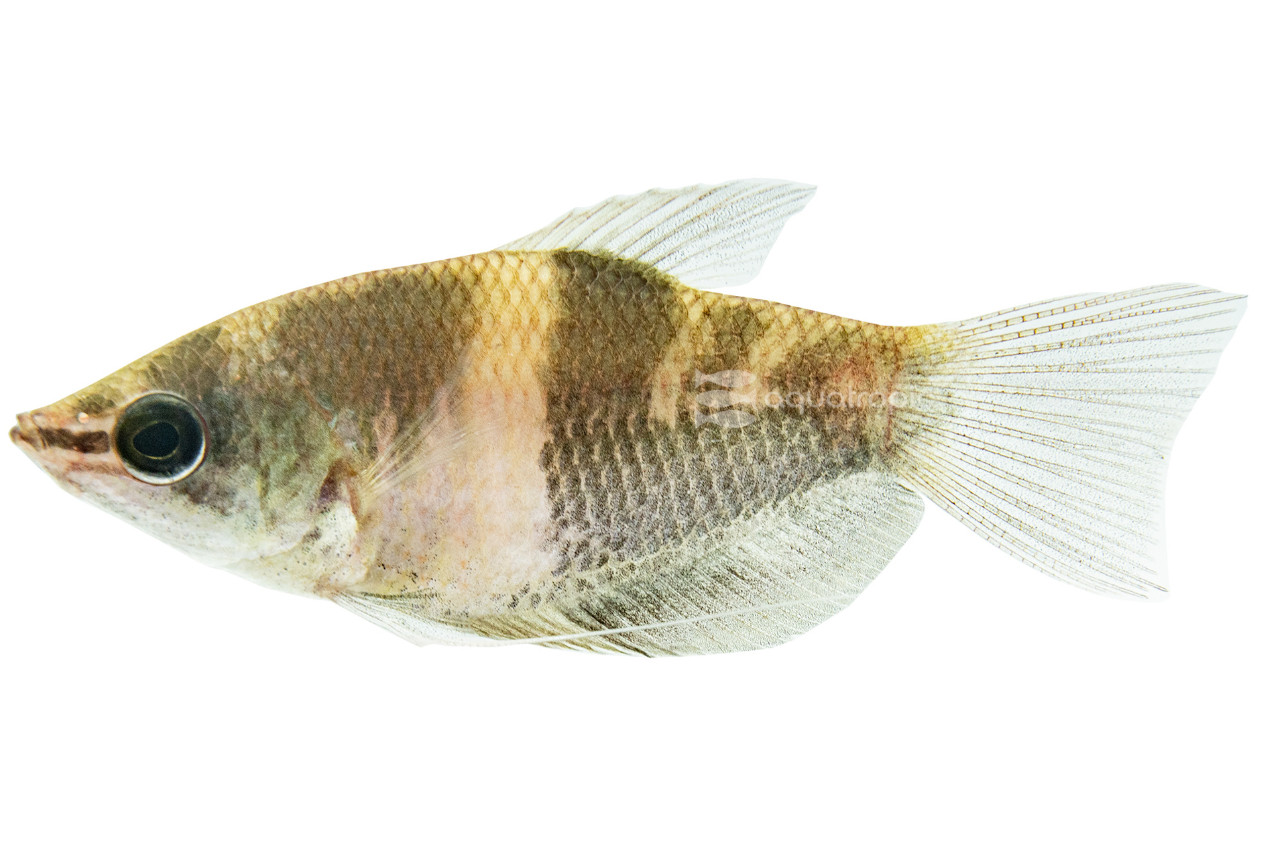
Sphaerichthys acrostoma goes by the common name Giant Chocolate Gourami, and while that name might conjure images of a dessert tray, the fish itself is a secretive little predator, originally from the blackwater peat swamps of southern Borneo. It's the largest of the Sphaerichthys genus, reaching close to four inches, which still makes it modest in size, but a giant compared to its cousin, the more commonly seen Chocolate Gourami, Sphaerichthys osphromenoides. You might also see these fish sold under the names Sharp Nosed Gourami and Black Lined Chocolate Gourami, but not often; they can be a rare find in the hobby. GCGs come from a narrow range around the Mentaya River drainage near Sampit, Indonesia. The water of their home is so devoid of dissolved minerals and so heavily stained by tannins from decaying leaf litter that it can run a pH as low as 3.0 to 4.0. That's an extreme environment, and it means this is not a beginner's fish, but if you can commit to replicating it, the payoff is a unique and charismatic addition to an epic blackwater display.
If you're going to have trouble with this species, water chemistry is where that's going to happen. Sphaerichthys acrostoma wants quite soft, and (as referenced) surprisingly acidic water. While wild specimens are pulled from water that's almost unimaginably extreme, we've found that in captivity the fish does well and stay healthier long term with a pH somewhere in the 4.5 to 6.5 range, with hardness kept low, ideally under 4 dGH (which happily is much more easily achievable). Temperature should sit in the upper 70s to around 82°F. The single best thing you can do for this fish is add tannins to the water column with things like Indian Almond Leaves, alder cones, or a layer of catappa bark in the substrate. This isn't just cosmetic; the humic and tannic acids that stain the water also have mild antifungal and antibacterial properties that these fish evolved alongside, and they seem to noticeably reduce stress and disease in captivity. Nitrates need to be kept low and stable, so plan on efficient filtration paired with frequent, modest water changes rather than large, dramatic ones, since sudden shifts are to be avoided.
For housing, we suggest nothing smaller than a 29-long for a group of six. Giant Chocolate Gourami aren't a tightly shoaling species in the way tetras are, but they're calmer and more confident in numbers, so aim for at least five or six individuals if you have the space. A slightly larger aquarium, like a 40 breeder or a 55 would allow you a much larger group and better water chemistry stability, both of which this fish appreciates. Sparhichthys are also mouthbrooders, with the male in this species carrying the eggs, and a slightly larger, well-established tank gives any resulting fry a fighting chance without heavy intervention. This is fundamentally a shy fish, and design and stocking decisions should all be made with that in mind.
Aquascaping should draw directly from the peat swamp habitat this fish calls home. Think of a dark substrate, driftwood arranged to create shadowed hiding spots, and a generous layer of leaf litter left to slowly break down on the bottom. Light should be kept low to moderate, both because that's what this fish is used to and because most true aquatic plants struggle in this kind of low mineral, tannin-stained water anyway. Floating plants like Salvinia or frogbit are excellent for diffusing what light does reach the tank. If you want to go further, a paludarium style setup with emersed growth above the waterline can look spectacular and lets you lean into the blackwater biotope even more. (We've written a couple articles on Paludarium displays too). As for invertebrates, this is one of the fish we'd actually caution against mixing with dwarf shrimp, since Sphaerichthys acrostoma is an opportunistic micro predator that won't hesitate to eat anything shrimp sized, particularly young ones.
Speaking of diet, feeding is one area where this species is actually pretty easy. In the wild these fish are picking insects, larvae, and other small invertebrates out of the leaf litter, and in the aquarium, they'll take a wide variety of small frozen and prepared foods once settled in. We feed ours a rotation of Gamma frozen Cyclops, Tubifex, Mosquito Larvae, Baby Brine Shrimp, Mini-Bloodworms, and Rotifers, all of which are appropriately sized for their small mouths. Gamma's irradiation process is a real benefit here too, since it lets us offer that variety without the disease risk that can come with unprocessed frozen foods, which matters even more for a fish that's already working with a narrower margin for error. For a dry option, Nutramar's small pellet and Crumbles in the Freshwater Complete formula are readily accepted once the fish are established and offer a good baseline of quality nutrition between frozen feedings.
For tankmates, keep things quiet and slow moving. Small rasboras like Boraras or Trigonstigma, kuhli loaches, and other soft water blackwater species that won't outcompete this shy gourami at feeding time are all solid choices. Skip anything boisterous or fin nipping and skip larger or more assertive gouramis as well. Given the specificity of its needs, a species only display, or a very carefully chosen blackwater community, is really the way to get the most out of this fish. If you can commit to the water chemistry, Sphaerichthys acrostoma rewards you with a rare, genuinely fascinating fish that few other aquarists will have and the rare opportunity to breed a species that isn't readily available as an aquacultured specimen at the time of writing this. Ask your LFS about getting you some Giant Chocolate Gouramis from Aquatropic today.