Cold Koi Keeping (Winterize your Pond)
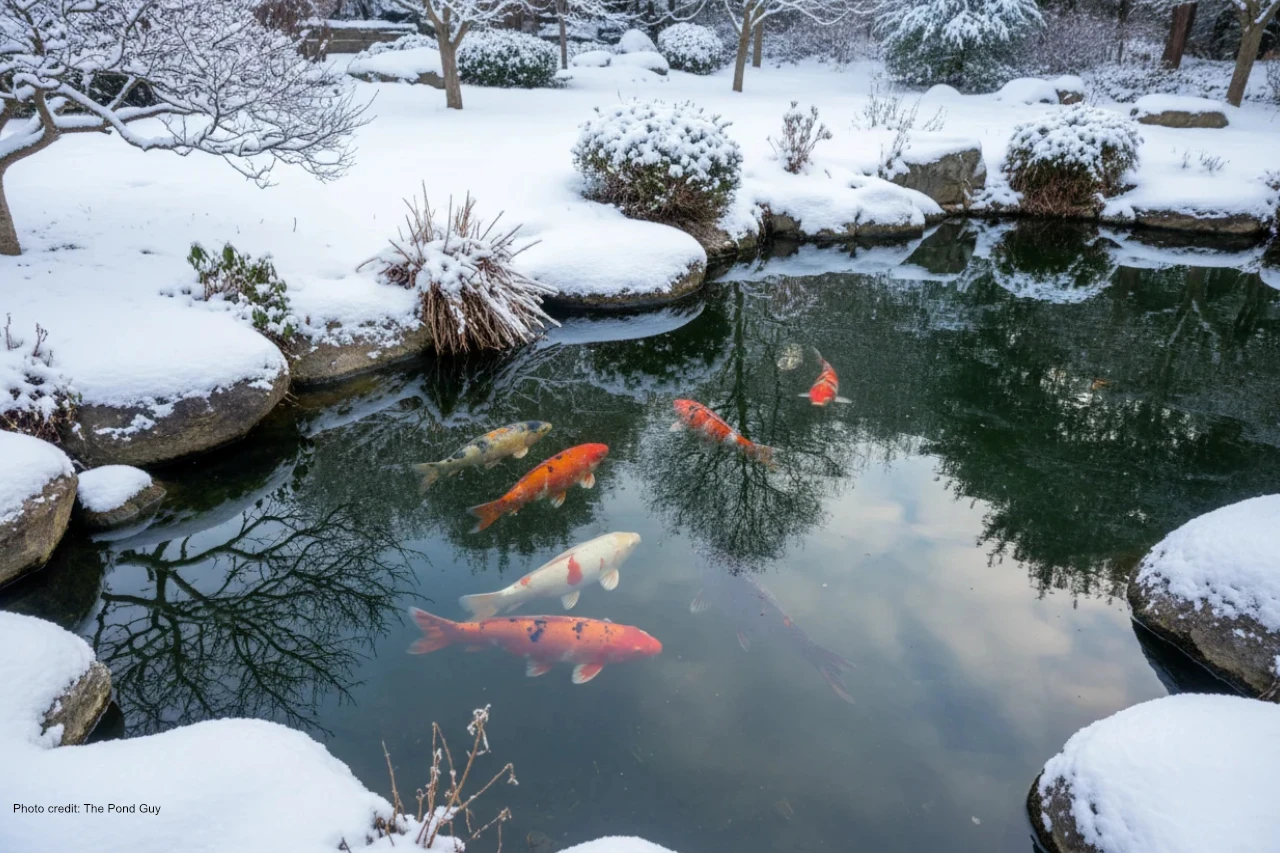
To quote George RR Martin, “Winter is coming” but how soon depends entirely on where you keep your fish. Pond keepers in Minnesota, Ontario, and Maine are probably already watching overnight lows, while keepers in Florida, coastal California, and southern Texas may not see a real chill until December, if it gets cold at all! Everything we cover here, from when to stop feeding to whether to run a waterfall, depends on your local climate and, more precisely, on your actual water temperature. Use the dates below as rough guides and let the thermometer decide.
Feeding is the first and most important adjustment. We're going to state something real obvious here: fish are cold-blooded, so their metabolism follows the water temperature. They aren't the only thing that slows down as temps drop, all biological processes do. So logically, the beneficial bacteria that keep your water clean slow down as well. When overnight air temperatures start dipping into the 50s, begin checking your pond with a thermometer, (don't guess based on the forecast.) When the water falls to about 60 - 65°F, cut feeding roughly in half. Some pond keepers will also switch to a lower protein, lower calorie dense winter food like Wheat Germ based offerings that are easier to digest in cooler water. Once (if) the water settles into the low 50s, stop feeding altogether. Undigested food sitting in a cold, sluggish gut can cause real problems, and uneaten food in the water only adds to the waste load that your lethargic filter bacteria already can't handle.
If your pond stays in the 50s all winter, as many do in the Pacific Northwest and parts of the mid-Atlantic, you can offer a small amount of winter food on the warmest days. Keep portions small and stay on that food until the water temp climbs back into the 60s in spring. In the deep South and the desert Southwest, ponds may hover in the 60s for much of the winter. Fish there stay active and can eat modestly, but they will still need less food or a lighter, lower protein diet than they got in July. Whatever your region, a good rule is to feed only what the fish will finish within a few minutes, and to skip the feeding if the weather is swinging wildly from day to day.
Fall colors are amazing, but in our context of pond keeping, leaves are bad mmkay... As they break down, they steal oxygen from the water (google “biological oxygen demand”). Decomposing leaf litter and fish waste can also make a conducive environment for problematic bacteria and parasites. If you have a small pond and a high tolerance for cold water, you can simply pull leaves out by hand. Most of us use a pool net on a regular schedule throughout the fall. One of the best approaches is to cover the pond with netting before the leaves start falling and keep it there until the trees are bare. Then take the netting down. Most pond netting cannot carry a load of snow and ice, and a frozen net is nearly impossible to remove without tearing it apart. If leaves have already settled on the bottom, get them out as soon as you can. A thorough cleanup in late fall is well worth the effort.
Now is also the time to cut back your plants. Water lilies should be trimmed to a couple of inches above the crown, and most marginal plants can be cut to a few inches above the water or ground. Dead plant material that rots in the pond causes the same oxygen and habitat problems as leaves. Anything that is not hardy in your zone, such as tropical lilies, water hyacinth, and most floating plants, will not survive a freeze, so find them a home indoors or just accept it as an annual (something you replant every year). Hardy plants in mild regions can often stay in the pond with only light trimming. If you are unsure how a specific plant handles winter in your zone, look up its needs before the first hard freeze. Late fall is the perfect time to divide crowded lilies, although some plants, like irises, do better when divided in summer.
Oxygen and gas exchange matter just as much in winter as they do in summer. Koi still needs oxygen, and the pond needs a way to release the gases that build up under ice, including carbon dioxide and the byproducts of decomposition. Where ponds freeze, an air diffuser, a circulation pump, or both will keep water moving and hold open a small hole in the ice. Suspend them above the bottom of the pond so they don't freeze in place and so the warmer water at depth stays undisturbed. In the coldest regions, including the northern Plains, the Upper Midwest, and most of Canada, a floating de-icer may be needed to keep that opening from sealing over. If you need to open a frozen pond, melt a hole with warm water. There is a balance to be had here, you want oxygen exchange, but you also want the insulation and protection that the ice provides. Depth is an important component of your winter preparation. In regions with hard, extended freezes, a pond should have an area that is at least three feet deep, and deeper is better, so that the fish have a layer of water that stays above freezing. Shallow ponds in cold climates may not be safe for your fish and might require a move indoors for the season.
Waterfalls need a regional decision as well. If your winters stay above freezing, a waterfall adds beautiful movement and oxygen, so let it run and keep up your usual maintenance. If your pond freezes, turn the waterfall off, no exceptions. Frozen waterfalls make spectacular photographs, and we love the ones you send us, but ice is unpredictable. We have heard too many stories of ice forming in a way that redirected the flow out of the pond, leaving a drained pond and a skating rink in the yard. If your pump sits where it can freeze, remove it and store it for the season.
Finally, a word about pond fish that are not Koi. Many keepers start their love affair with aquatics by getting an aquarium and then later graduate to (or add) ponds, often bringing some of their oversized fish into the ponds for space and some of those species are tropical and will not tolerate a cold winter. Research each specie's temperature limits. Delicate fish can overwinter in tubs, stock tanks, or aquariums in a garage or basement. We have even seen a pond keeper in Wisconsin keep Pacu through the winter in their basement using animal feed troughs from a local farm store, which proves that thinking creatively can open up options.
Pond season never really ends, it just changes pace. A few hours of work now will save you time, money, and worry later, and your Koi will come out of winter healthier for it. Visit your local pond store to stock up on winter food and dye and check back with us here at Aquatropic in the spring for our thaw out guide.