Algae Forward Food? Yes Please.
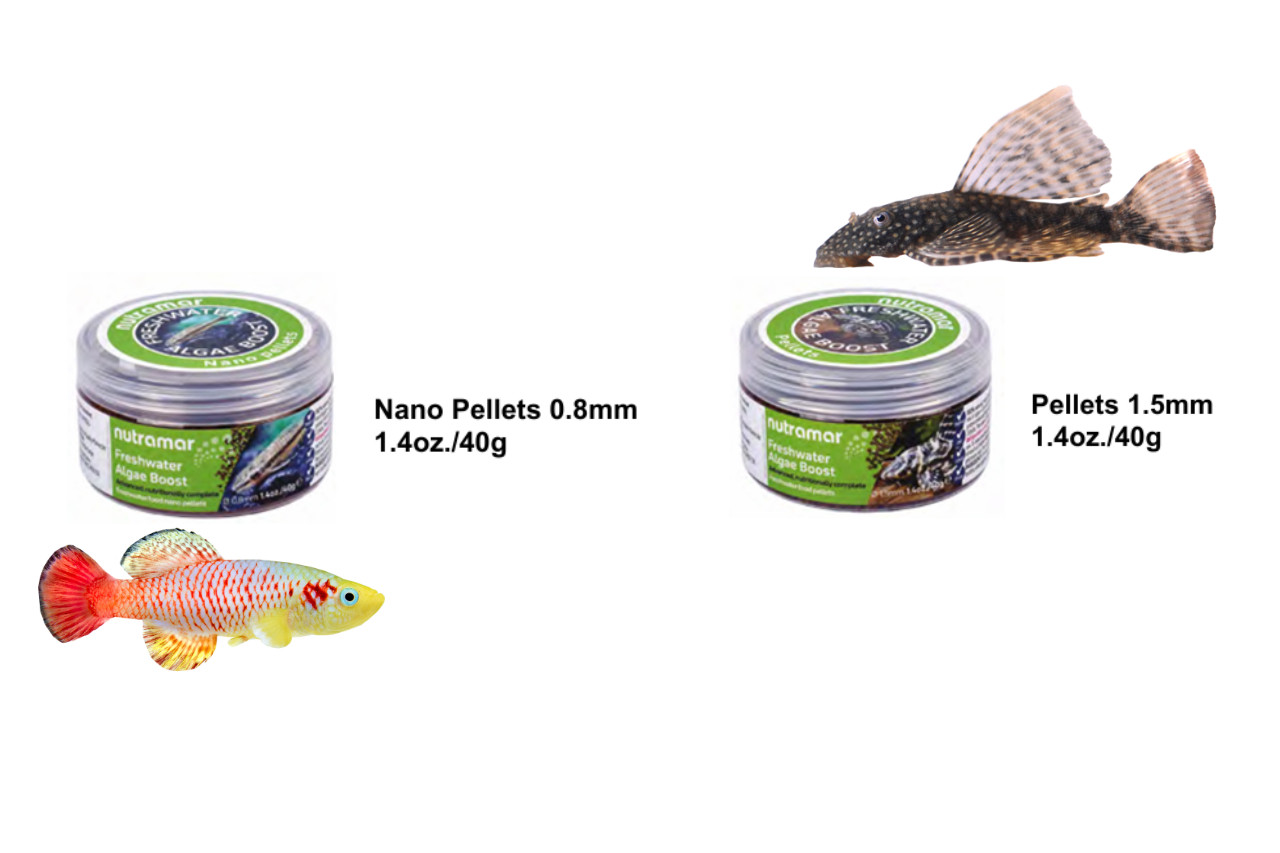
If you've spent any time keeping freshwater fish, you've almost certainly learned that not all pellets are created equal. Peruse the food section at your local fish store and you'll find dozens of options making bold claims, but when it comes to actually supporting the long-term health, color, and vitality of herbivorous and omnivorous freshwater species, most of them fall well short of what's truly needed. That's precisely the gap that Nutramar's Freshwater Algae & Color Boost Pellets were designed to fill, and once you understand what's actually inside them, and the kinds of fish they're built for, it becomes nonsensical to go back to whatever you were feeding before.
Nutramar is part of the Quality Marine family, which means all their foods have been developed, tested, and refined in perhaps the most sophisticated wholesale marine and freshwater livestock facilities in the world. These aren't pellets dreamed up in a marketing department; they're the result of 50 plus years of hands-on feeding experience with demanding, delicate, and often finicky species. This pedigree matters, because the Algae & Color Boost line is genuinely different from the standard high-protein pellets that dominate the market.
The core concept here is a deliberate shift toward lower protein levels and higher algae / vegetable content. For tons of freshwater aquarium fish this is actually a more biologically appropriate approach. Many popular species like the Plecos grazing along your driftwood, the Stiphodon Gobies browsing the bottom of a planted display, or the various catfish species working every inch of the substrate, and countless others all have digestive systems adapted to processing plant-based material, algae, and fibrous matter. Stuffing them full of high-protein formulas designed primarily for carnivores leads to all sorts of problems over time, from poor coloration and sluggish behavior to digestive issues. The Algae & Color Boost Pellets flip that equation, prioritizing what these fish actually evolved to eat.
The ingredient list reflects that philosophy. Every single one of these fish also needs some protein. So, the Freshwater Algae and Color Boost formula draws on fish and fish derivatives alongside spirulina, vegetable proteins and derivatives, incorporating aquatic-appropriate yeast, soya lecithin, crustacean extract, and squid extracts and derivatives; all 100% natural ingredients, with no artificial fillers or unnecessary additives. The yeast is a meaningful source of B vitamins and amino acids and helps support immune function. Soya lecithin, serves as an emulsifier that aids fat absorption, which directly benefits the uptake of fat-soluble vitamins like A, D, and E. Why is this important? Fat-soluble vitamin deficiencies are one of the more common (and yet easily addressable) causes of color loss and immune deficiency in captive aquatics.
Speaking of vitamins, want to get real geeky for a minute? This is genuinely impressive: Vitamin A at 22,500 IU/kg, Vitamin D3 at 2,000 IU/kg, a substantial 300 mg/kg of Vitamin E, and a stabilized Vitamin C at 100 mg/kg. Stabilized Vitamin C matters, because ascorbic acid degrades rapidly in many foods and many manufacturers list it on a label without ensuring it survives long enough to actually benefit the fish. Vitamin C supports collagen production and wound healing. The natural sensory attractants in the formula also encourage reluctant feeders to engage with the pellet, which is something all of us who keep naturally shy fish or anyone with newly introduced fish will appreciate. What good is amazing food that nothing will eat? Not a problem here.
So which fish are going to benefit the most from making this pellet a cornerstone of their daily diet? Perhaps the most obvious candidates are Plecos (in all their spectacular diversity.) Whether you're keeping a common Pleco, a stunning zebra Pleco, a Bristlenose, or any of the Panaqolus and Hypostomus species that turn up in your LFS, algae, plant matter and even lignen are often central to what these fish eat in the wild. With a few exceptions, Plecos that are consistently fed a plant-forward diet show dramatically better coloration and more active behavior, than those fed a standard diet and whatever incidental algae grows in the display. The Algae & Color Boost Pellets give them exactly what their bodies are asking for. Plecos are also perfect candidates for the Shots which can be stuck to rocks or glass and allow for a very natural feeding behavior for fish with down-turned mouth parts.
Green Cichlids are another excellent match; think species like the Green Terror (Andinoacara rivulatus), the Flag Cichlid, various Eartheaters, and other South American and Central American Cichlids that browse heavily on algae, plant detritus, and vegetable matter as part of their natural diet. These fish are often kept because of their extraordinary coloration, all those electric greens, golds, and iridescent scales, and maintaining that color is directly tied to diet. Fish that are nutritionally deficient in carotenoids and plant-derived pigments will fade. Fish that are fed nutritionally appropriate, color-supporting formulas will genuinely glow. The color boost component of these pellets works synergistically with the natural carotenoid-rich ingredients to support pigmentation in ways that other pellets simply cannot replicate.
Corydoras Catfish and their relatives are another group that responds beautifully to this food. Corys are often relegated to a "cleanup crew" role by hobbyists who assume they'll take care of themselves by scavenging, but this does them a real disservice and frankly might even starve them out. These are active, social, and genuinely engaging fish that deserve deliberate, thoughtful feeding. The smaller pellet format (0.8mm) that Nutramar offers in this line are ideal for Corydoras. As are the Shots which allow them to feed naturally at the bottom of the display without competing with mid-water and surface-feeding tankmates.
Feeding all the Nutramar Pellets very straightforward. These pellets are quite nutrient-dense, so it's better to feed smaller amounts more frequently rather than one large dose which is a good rule of thumb for most pelletized foods. Feed what your fish can consume in a few minutes, do it two or three times a day if your schedule allows (and your fish require), and watch for any uneaten pellets that might be accumulating and fouling the water, if anything goes uneaten, you're feeding waaay too much. The water balance of the pellets is very carefully planned for binding and palatability for your fish. Don't reach into the container with wet fingers.
When you commit to a diet built around a food like the Algae & Color Boost Pellets, the results will speak for themselves. Fish that might have looked acceptable before start looking exceptional. Colors deepen, activity levels increase, and fish that seemed healthy enough reveal what they're actually capable of when they're being fed appropriately. Ask your local fish store (LFS) about picking up Nutramar Freshwater Algae & Color Boost Pellets from Aquatropic, and if you have some carnivore fish too, grab some of the Freshwater Complete Pellets to round out the rotation. Your fish will show you the difference.