A Tank with Sole
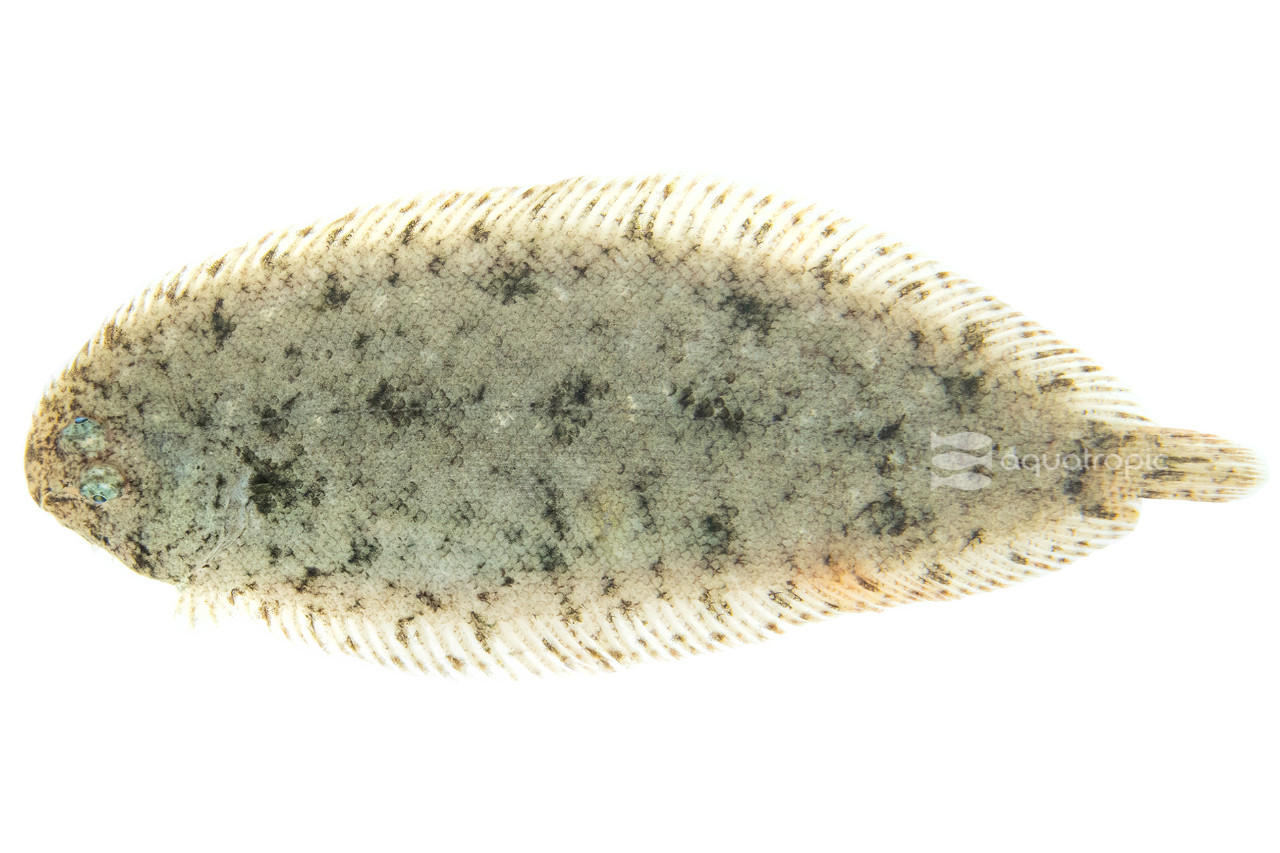
Brachirus villosus goes by a couple of names that tell you a lot about this fish before you even get the tank running: the Velvety Sole and the Hairy Sole (or sometimes Flatfish) Both common names reference the same physical trait: a fine, almost fuzzy texture across the skin that gives this diminutive flatfish a soft, matte look rather than the glossy sheen of scales you usually expect. As far as flatfish go, this is an absolutely tiny species, topping out around four inches.
It's native to the turbid river channels and swampy backwaters of central-southern New Guinea, which in turn means that this isn't a fish built for crystal-clear, brightly lit display tanks. This is a fish built for fine sand or even mud, shadow, and patience, and if you lean into that rather than fight it, it becomes a genuinely rewarding oddball to keep. In the wild, Velvet Flatties spends their life doing flatfish things; mostly lying flat against or partially buried in soft sediment with both eyes rotated up toward the same side of its body, watching the world go by (while doing an excellent impression of the riverbed.) Reports that this fish is an algae grazer are wildly overstated. It's an ambush predator and opportunistic scavenger, picking off small invertebrates, worms, and bits of organic material that drift along the bottom of turbid, slow-moving rivers.
That turbidity matters; it carries food and the constant cloudiness reduces the effectiveness of visual and smell-based predators. All that said, the interplay between visibility, camouflage, and ambush hunting in a genuinely murky, sediment-heavy river system, isn't something you can fully replicate in a home aquarium, and you probably shouldn't try (but if you do, we totally need to see this.) We're thinking most of you won't try it, because not that many folks want to stare into a permanently cloudy display tank. What you can replicate, and what will actually let this fish express its natural behavior, is the soft substrate, dim lighting, and slow-moving water that let it settle in and feel secure enough to hunt and rest the way it would in the wild, even without the murk.
For tank size, a 20-gallon long is a reasonable minimum for a single Velvety Sole, and we suggest aquariums that have larger or longer footprints over anything tall, since virtually all of this fish's life happens on the substrate and depth just makes it harder to get food down to it. If you're hoping to keep a small group, which does let you see more natural interaction and reduces the odds of any one fish feeling pressured, stepping up to a 40-gallon breeder style tank gives everyone enough floor space to stake out their own patch of sand.
Substrate is the single most important design decision you'll make for this fish. You want a fine, soft sand bed, at least two to three inches deep, with nothing sharp or coarse mixed in. This species buries itself regularly, and anything abrasive is going to cause scale and skin damage over time, which is a bigger deal for a fish whose entire defense strategy depends on healthy, intact camouflage. Lighting should be kept subdued, since this is a fish from shaded, turbid backwaters rather than open, sunlit water, and harsh lighting will just push it to stay buried around the clock instead of showing itself. The gentle current from your filter return is plenty, since these are slow-water fish by nature and you don't need or want strong flow pushing all your nice fine substrate around.
Aquascaping around that sand bed should lean into a soft, slow blackwater river theme. Driftwood pieces, particularly ones with some texture and shadow-casting branches, give the tank visual interest while reinforcing the low-light feel this species prefers. Floating plants like Duckweed are a great addition here, since they diffuse the light naturally and add to that dappled, overcast feel without requiring you to actually cloud up the water. For rooted plants, look toward hardy, low-light options that would (plausibly) occur in similar Southeast Asian and New Guinean waterways, things like Cryptocoryne species and Java Fern mounted on the driftwood rather attempting to plant them in the often disturbed substrate, since your sole is going to be resettling that sand regularly. Anubias works well for the same reason and affixed in a similar way.
As for tankmates, this is an extremely peaceful, slow-moving fish that does best with equally calm companions that won't out-compete it for food, pick on it, or stress it into hiding permanently. Small, (though, not so small that they become lunch...) peaceful bottom and mid-water fish that tolerate similar soft, slightly acidic to neutral water work well, and we'd steer clear of anything fast, aggressive, or so active that mealtime turns into a race the sole can't win. Quiet, unobtrusive schooling fish that occupy the water column above the sand rather than competing directly for benthic space make for a good visual complement without creating any real competition. As far as invertebrates go, small, peaceful shrimp and snails that stick to the water column or decor rather than burrowing alongside your sole are fine additions, though anything small enough to be mistaken for a meal should be (and will be) considered fair game.
Feeding is where new Velvety sole keepers might stumble, because a buried, motionless fish is easy to overlook at mealtime. Brachirus villosus is a carnivore through and through, and it needs meaty foods delivered close to where it's resting rather than dropped in open water and hoped for the best. We'd build a feeding routine around Gamma's frozen line, particularly Bloodworms and Mysis shrimp, both of which are appropriately sized and have the kind of scent and movement that will trigger a feeding response even from a fish that's mostly buried. Gamma's Brine Plus Omega 3 is another solid rotation option for variety. It can take sometime for these ambush hunters to learn that sinking pellets are food too, but it will happen if you keep at it. Once it does, you obviously want to use the Nutramar Complete sinking pellets, and Crumbles. We always target feed Velvety Sole when first introducing them to frozen and pelletized food. You can emulate this at home with a turkey baster, placing food directly near a visible eye or a slight mound in the sand. This will ensure your fish gets food that makes it down to the substrate past the many other hungry mouths further up the water column.
The Velvety Sole isn't a fish for someone who wants constant activity and bold colors on display. It's a fish for someone who appreciates the quiet, patient side of the hobby; the kind of species that rewards you the moment you catch it gliding across open sand or settling back into a fresh patch of substrate with a shrug of its fins. Set the tank up around its real biology rather than forcing it into a role it was never built for, and it'll settle in as one of the more genuinely interesting oddballs anyone keeps. We mean, who's got a Flatfish?!? Head to your LFS and ask them to get you one from Aquatropic today!