Prettiest Angel of Them All?
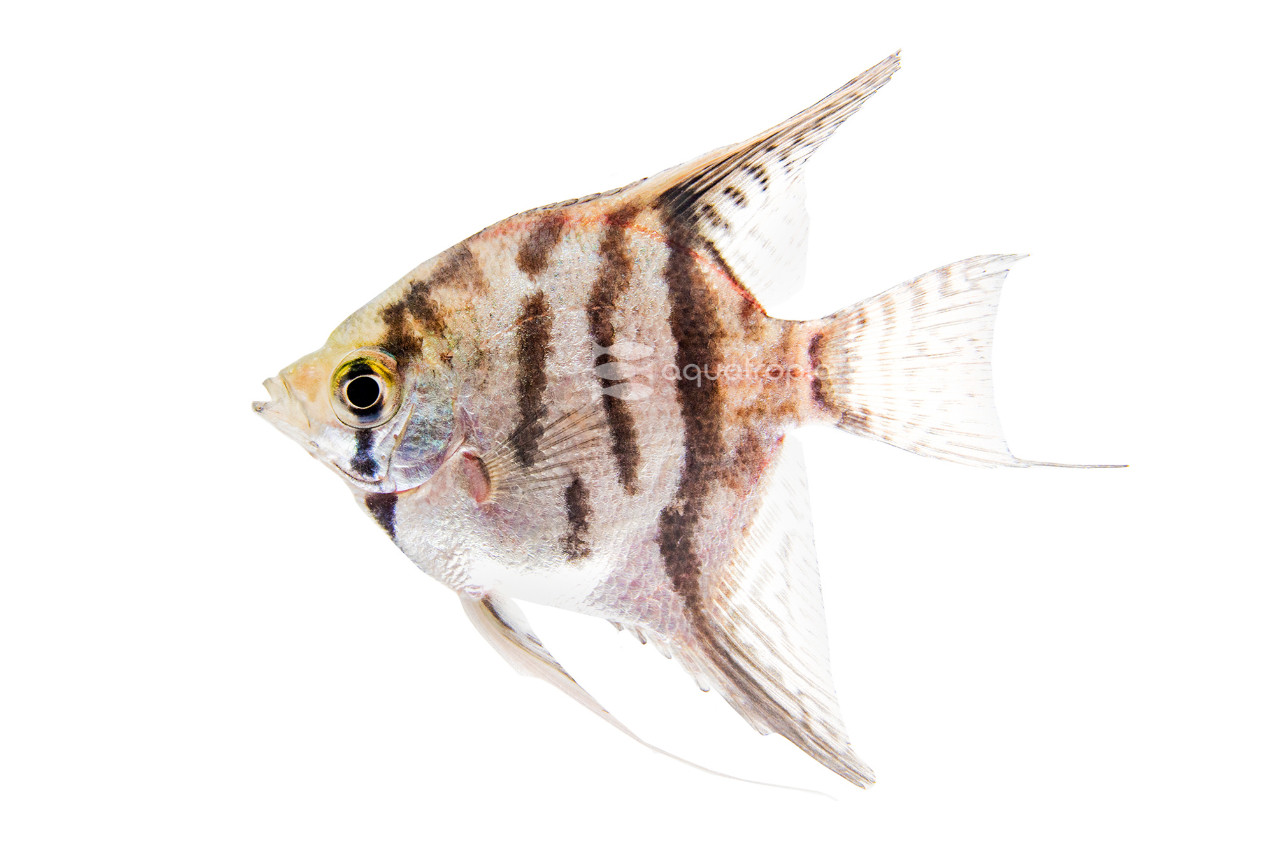
If you've ever been in an aquarium store, you've seen a freshwater Angelfish, scientifically known as Pterophyllum scalare. This species is among the most common fish in aquariums, and they anchor so many displays for many good reasons. They're hardy, they're very peaceful and the vast majority of them are really, really attractive, with long flowing fins and elaborate colors / patterns. There will likely be a rousing debate about which is the fairest of them all, but there is no doubt the Blue Leopard Angel should make the short list for most gorgeous Angel.
A lot like Goldfish, Koi and Clowns (on the marine side of things), freshwater Angelfish have been bred in captivity for many decades, and as a result, here at Aquatropic, we now offer over 50 different unique strains of Angel to our retail partner stores. The wild coloration of Pterophyllum scalare is beautiful, but does not vary all that much, a silvery fish with tall, dark vertical bars along their sides. While the Blue Leopard Angel does have the same shape as the original, the coloration could not be more different! Blue Leopards have colors that would be right at home on a Blue Leopard Discus. Their metallic blue bodies are covered by a purpleish-maroon dot and dash pattern that varies dramatically from specimen to specimen. These fish will make anyone walking past your aquarium say wow! Size-wise they'll get to be somewhere in the four-inch-tall range and be three inches long or so.
While definitely not a monster fish, Blue Leopard Angels are still going to need a reasonable amount of space in the home aquarium. You could keep a pair in a tank as small as 30 or 40 gallons, but a better size would be 55 or larger, especially if you wanted to keep a small group. You'll want an aquarium where the full volume of the tank is focused on height instead of footprint (we don't often say this) as they will appreciate the height of the water column more than spread out area. If you have the space, a 90 gallon, or a 110 tall make really incredible Angelfish display, and since both those tanks are four feet long, they don't take up much more space than a 55 gallon would! Flow should be gentle, and diffuse. Decorations should be tall; planted tanks and driftwood displays are perfect homes for freshwater Angelfish. Floating plants or plants that grow tall enough to provide shade will make your Blue Leopards more comfortable.
Pterophyllum scalare is a very adaptable fish in regard to water chemistry, partially due to their extensive history of captive breeding (and selection). They can live in aquarium water that is hard or soft, in a pH that could be anywhere between 6.0 and 8.0. Aquariums for freshwater Angels should be on the warm side, shoot for 75-85 degrees Fahrenheit. They are also pretty durable when it comes to nitrogen-based pollutants, but you should still strive for low nitrate levels in your aquarium. The warmer water is, the harder it is for that water to carry dissolved oxygen. High nitrogen levels can exacerbate this problem, so keep your tanks clean and your fish nice and healthy.
Angelfish are the ultimate peaceful aquarium fish and an ideal community showpiece. Okay, yes, Freshwater Angelfish of all kinds are surprisingly good hunters for their showy appearance, which will lead some aquarists to debate about whether or not this is a community fish. BAH! If a fish is small and unwary or slow, the Angels have a good chance of eating them. Even though the internet abounds with photos of all kinds of Angels in aquariums with large groups of Neon Tetras, this ends up with the Tetras as a meal once the Angels are big enough. If you're okay with replacing your small Tetras on a regular basis, then this is a viable option for you. For most people, you're going to want to choose fish that are somewhat larger, which still includes a huge number of Tetras like Rummynose and Cardinals (if you want that same look.) Guaramis, Rainbowfish, Plecos, Corys, Rams and some Rasboras among others would all make great tankmates. You want to avoid notorious fin nippers like Barbs or say goodbye to those long flowing Angelfish fins.
Feeding Blue Leopard Angelfish is as easy as you'd expect from a fish that has been aquacultured into existence. They are notoriously not picky and have been eating flake and pellet foods since their mouths were big enough to take them. They'll happily accept Nutrmar Freshwater Complete, which is a perfect food for them, and is available both as a pellet and as a shot that can be stuck to rocks, glass or driftwood. You'll want to ensure that any food you give them sinks, as the Angels prefer to stick to the middle of the water column. They'll take floating food but can be outcompeted for it by fish that are more adept at surface feeding. They'll also love frozen and live foods like Gamma Mosquito Larvae, Bloodworms, Tubifex and any of the Brine Plus products Gamma offers. Live foods like small worms can help bring your fish into breeding condition, and variety is good in every diet.
If your group of Angels produces a pair, they are fairly likely to breed in your aquarium assuming you feed them well and have good water quality. Blue Leopard Angels are excellent parents and will defend each other and their eggs and fry as they grow. This defensive behavior is really the only time you'll see any “territorial” behavior out of your Angels. Make sure the parents are well fed, because even though they are generally good parents, they might cannibalize their kids if they get hungry (other adult Angels will not hesitate to eat eggs or fry, so you'll need to separate your pair from other fish if you want to rear out any number of babies. The fry can take fairly large food once they hatch and their egg sac gets depleted which only takes a couple days.
Keeping (and breeding) freshwater Angelfish is a cornerstone of the aquarium hobby, and everyone who does this ends up being very passionate about it. Blue Leopard Angelfish are some of the most beautiful fish you can keep in an aquarium. They're amazing to watch in their parenting roles, and they're a gorgeous component of a peaceful community setup. Whether you want to try and breed them yourself or just want to see those flowing fins in the first person, Blue Leopards are definitely a fish you should consider for your display. Head to your LFS (local fish store) and check them out for yourself. Tell them Aquatropic sent you!