Killer Killis
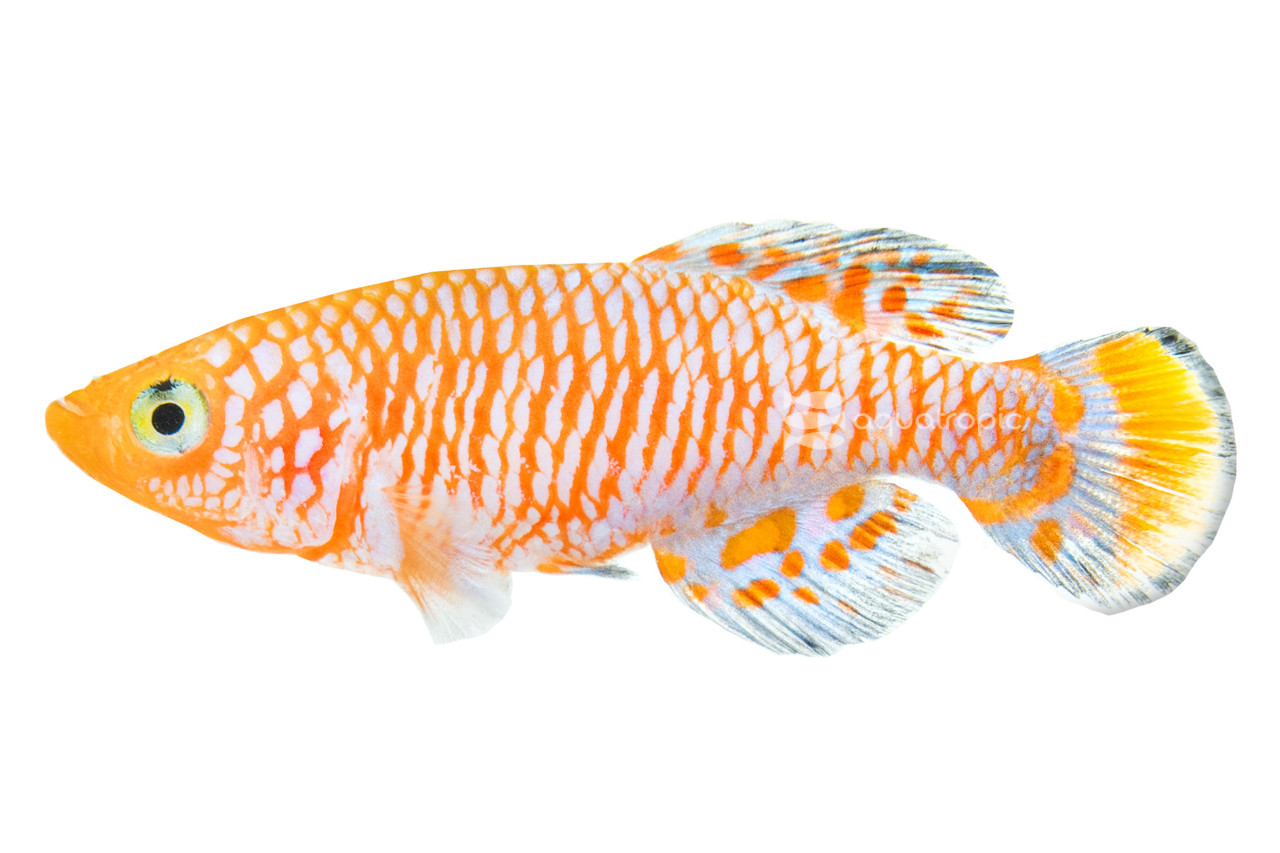
Killifish! We know, we know, right! You're probably as smitten as we are, but if you aren't aware of these ravishing little beauties yet, let's get you introduced. There are a few different species / varieties of them, but the favorite around here is the one known as the Rachovii Killifish (Nothobranchius rachovii) mostly for the absolutely jaw dropping coloration, but also for the incredibly interesting life history. For a long time, especially among newer aquarists, these fish were considered impossible to keep because they died within a year. Well, that sounds less surprising and ominous when you learn more about the species.
Rachovii Killifish come from east African floodplains, with an unexpected twist. They really only live in the temporary ponds, swamps and backwater formed when the rainy season forces the rivers over their banks and fills low lying areas with water. It is here that the Killifish lay their eggs. Then comes the interesting part. Those bodies of water are extremely temporary, lasting less than half the year usually. When they dry up, the Killifish die, but as long as the mud retains a tiny bit of moisture, the eggs survive and hatch when the puddles fill up again.
Luckily, for the survival of the species, Killifish are able to mature very quickly, from egg to sexually mature in less than a month! This year's batch of adult fish will hatch from the eggs laid by the Killifish in that pond last year, and will continue the cycle for the future generations, maturing, breeding and laying eggs again for the following season before the pond dries up again!
While there are a few reports of aquarists being able to keep them for up to a couple years, this shouldn't be expected, as the individuals of this species haven't had to live more than six or eight months for thousands of generations or more. This does add some interest to breeding them in a captive setting, though the vast majority of the Killifish you see are products of aquaculture at this point. Occasionally, you'll see some that are labeled with a series of letters and numbers that indicate when and where that strain was first collected.
A pair of Killifish, or even a group of three would be just fine in an aquarium of ten gallons or so as long as there is only one male. Males are pretty easily identified, being much more colorful, though the pearlescent white / silver females are also very pretty fish. The general rule of thumb is that each male should get at least ten gallons, and aquariums with multiple males should also have a lot of dense cover so the males have places to escape each other and stay out of sight (They're perfect in heavily planted displays.) While generally quite peaceful as a species, the territoriality between male Rachovi Killifish can be exceptionally intense, ending in injury or even death. They can be kept with other fish, that they will usually entirely ignore, though because of their unique life cycle (and astonishing beauty), Killifish displays are often species specific.
Rachovis aren't super sensitive to exact water parameters, though if you want to breed them at home, you'll need to pay a bit more attention. They'll suffer if nitrates get too high, so always keep those under 25ppm, and keep the water relatively cool for tropical fish at somewhere between 68 and 75. For those of you who are interested in breeding them, the warm end of this range will encourage reproduction as well as a pH around 6.5. Many aquarists use peat moss to collect and protect eggs. This can be removed from the tank later and allowed to dry out (though it should remain just barely, slightly damp). This dry out needs to last for a few months at least before hydrating. Once you (re)hydrate the moss, some of the eggs will hatch, then the moss can be removed and dried out again (for a week or two) and then hydrated again and more eggs will hatch. For best results, this process should be repeated until no more eggs hatch. Peat moss is not required to keep Rachovi Killifish, but it is the right pH and a perfect consistency for this reproductive process. Obviously, those of you who wish to go down this road, will want to do more research on the topic, but Killifish are very rewarding to breed and raise.
Killis are easy to feed, as even wild specimens don't have the luxury of being extremely picky about food. They'll do well, and show their best colors on rounded, high protein diet. We like to feed them Gamma Rotifers, Daphnia, Cyclops, White Mosquito Larvae, Tubifex, Mini Blood Worms, and all the Brine Plus (Garlic, Omega3 Spirulina) products Gamma offers. We also consistently feed the Killis Nutramar Freshwater Complete Pellets giving the fish the widest spectrum of nutrients and high protein levels they need to show off those dazzling colors.
Are you ready for Killer Killi display in your house? We are! It's a little bit different than keeping other tropical fish because of the intrigue inherent in their life cycle. It lacks nothing in the way of reward though and the person who can walk past a tank of Rachovii Killifish and not gasp out loud, or at least think WOW, is a troubled individual indeed! We're not saying you need a new obsession, but if you did, Rachoviis should be on the list of possibilities. Ask your LFS about getting you some Nothobranchius rachovii from Aquatropic today!