It's Not a Syn
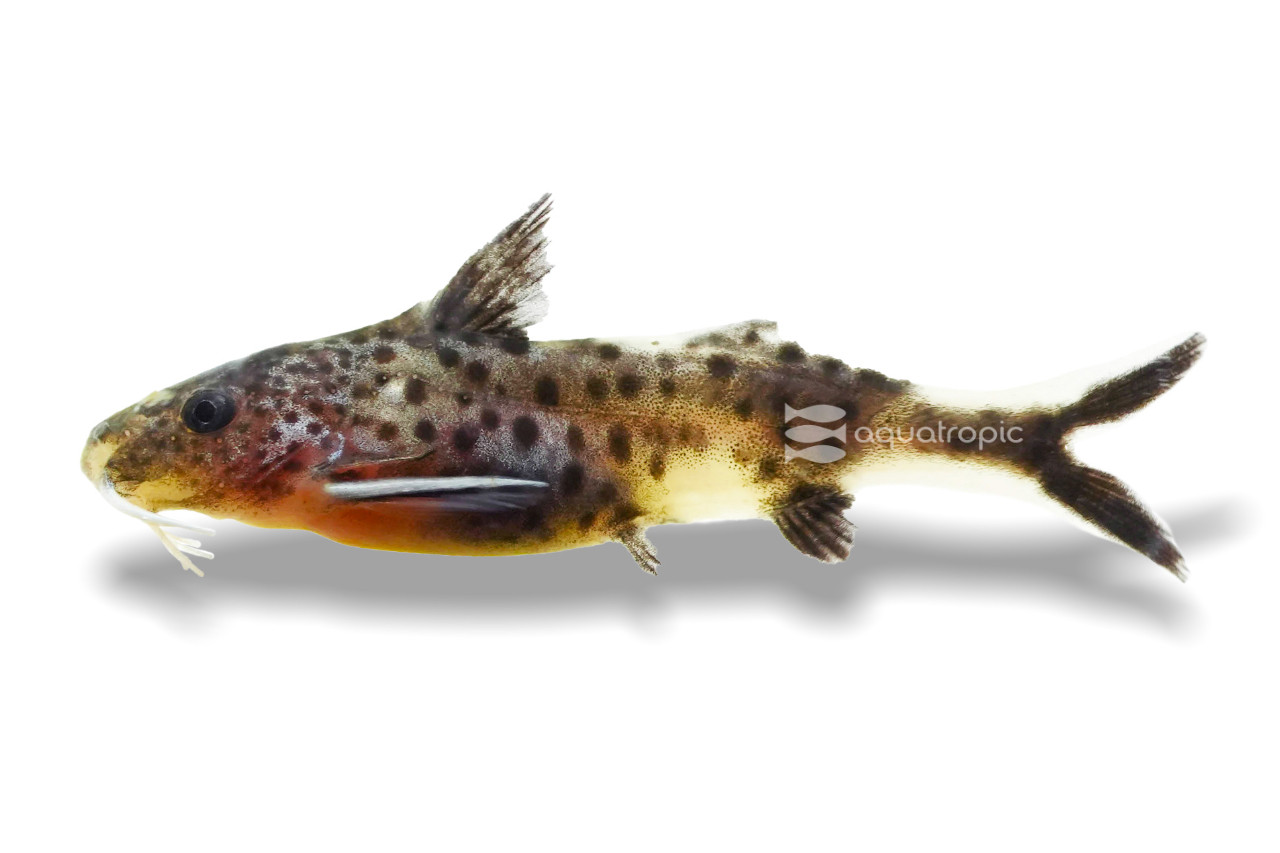
One of the coolest little cats around is the Dwarf Petricola Catfish (Synodontis petricola). Truthfully, all the Syno's are staff favorites around here for their interesting patterns, high activity levels and social behavior. As juveniles, many Synos will swim inverted earning them the common name “Upside Down Catfish.” DPCs will also sometimes make an audible squeak when being removed from the water, which has resulted in another interesting common name: “Squeakers.” These cute cats are a grayish color with black spots, with black fins and white margins / barbels.
These are pretty small fish and usually won't get much bigger than three and half inches long or so, but DPCs are also very social fish and should be kept in groups; four or five could be in a tank that is about 40 gallons or so (in the breeder footprint which is long), though they might need to go up to a 55 when grown. This display should have lots and lots of rocks, holes and caves to emulate the habitat they come from, the shallow waters of Lake Tanganyika in Africa. The more hidey holes they have, the bolder the Dwarf Petricolas will be, darting in and out of them all day long. The substrate should be a fine, soft sand to help protect the catfish's delicate underbelly and barbels.
You can keep Dwarf Petricola Catfish in a planted display, but they like a good bit of algae and may nibble on plants in the quest to get more of it. They also like to hide in the shade so the best plants would be tall and hardy like Anubias. They get along pretty well with a wide variety of fish. You'll often see them being kept with a variety of Tanganyikan Cichlids, or Congo Tetras but also in less biologically accurate displays where they make good tankmates for Plecos, Danios, other big Tetras and Rainbowfish. We say larger Tetras because even though the DPCs are small, they are also hungry and if they can catch a small shrimp or very small unaware fish, they'll definitely eat it.
As that last statement might make you think, these fish are generally pretty easy to feed. You just need to make sure there is food that is appropriately sized for their mouths. In house, they get fed twice a day, and we rely heavily on Gamma Foods like their Rotifers, Daphnia, Mini Bloodworms, Tubifex, Brine Plus Omega and Brine Plus Spirulina. This last one is important because they need a good bit of algae in their diet. Here we supplement the meaty food with the Nutramar Freshwater Algae and Color Boost formula Shots and Crumbles. The Shots are perfect because you can stick them to the low glass or a smooth rock and the Dwarf Petricolas can graze away on it like they would in the wild. We also like the Crumbles because they offer the tank a varied food size, making sure everyone in there gets something.
An interesting tidbit about Synodontis petricola is that in regard to its reproduction, it's known as a “parasitic mouthbrooder.” Yes, it does sound a bit like a horror film plot line; many of the cichlids of Lake Tanganyika (and elsewhere) keep their young in their mouths to protect them while they're still small enough to fit in there. It's a really cool thing to see in your home aquarium. What happens with our Dwarf Petricola Catfish is that they lay their eggs among the eggs of another mouthbrooding fish. The unaware Cichlid takes up the baby DPCs into its mouth with the rest of its own fry, but the Catfish fry are slightly bigger and generally eat their “step siblings.” Cichlids can be excellent parents and the baby DPCs will be well taken care of during their reign of terror over the other fry. If you are going to try and breed Synodontis petricola on your own, you should remove the eggs from the aquarium and rear them in another tank, because without the Cichlid to protect them, the Dwarf Petricola will eat their own eggs!
These are among the most interesting and appropriately sized catfish you can buy for an aquarium. They're also really active and pretty, and adaptable to a wide range of displays. Make sure you keep them in a group and give that group as many hiding places as you can work out. Their constant exploration of that environment and their social interaction will keep your aquarium interesting for years to come. If you're looking for a moderately challenging fish to breed and raise, the Dwarf Petricola Catfish might be a great choice for that too! Ask your Local Fish Store about getting you some Synodontis petricola from Aquatropic today!