GULP
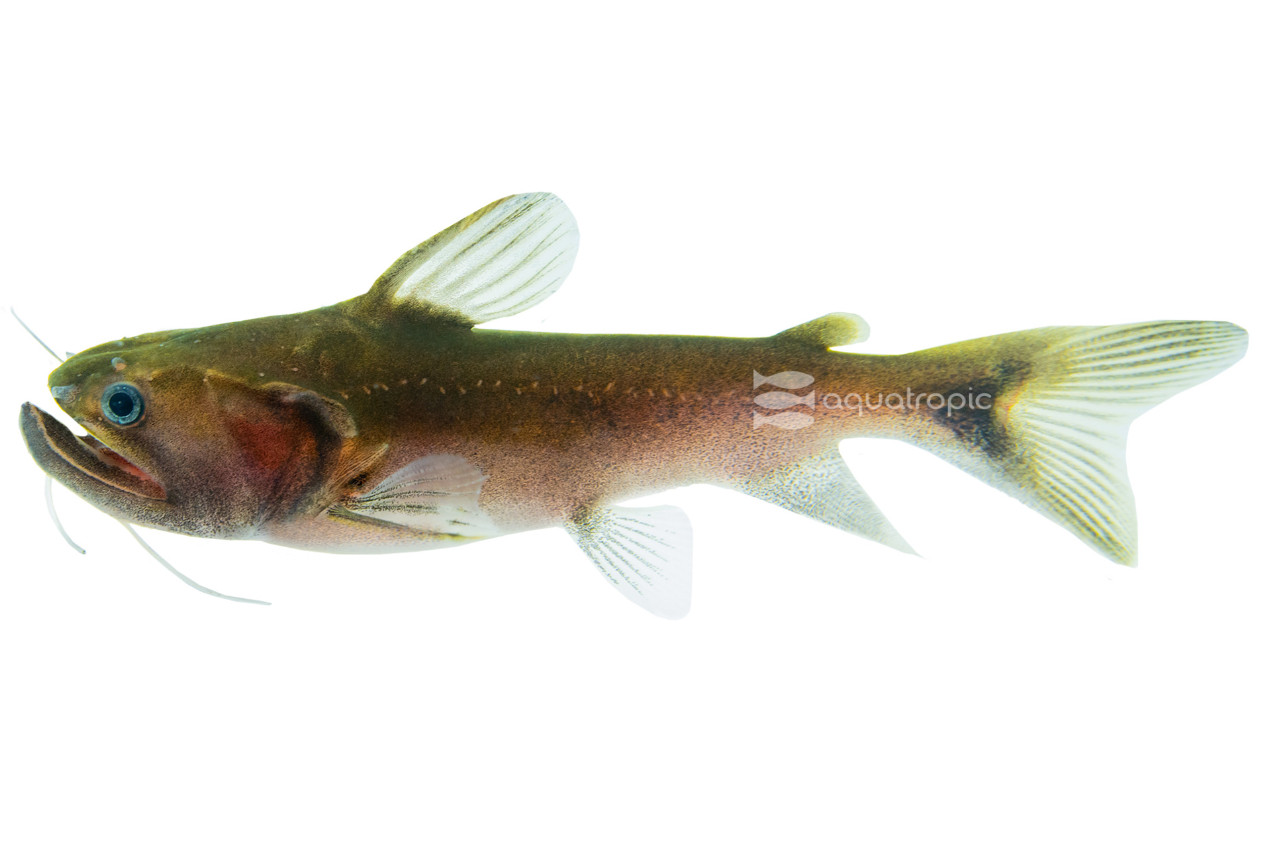
One of the best and most appropriate common names in the freshwater aquarium hobby belongs to the Gulper Catfish, also known by its scientific name, Asterophysus batrachus. They got this common moniker both from their oversized mouth, and their penchant for using it. You see, Gulper Cats will try to swallow any fish they think they can eat and they can eat a fish that is up to about half their length! You'll see some sources online saying they can eat fish at least twice their own size and this is ridiculous. However, they have been known to try and consume fish up to their own size (and maybe even a bit larger), and this almost always goes badly for both fish involved.
Gulper Catfish are pretty small when compared to the rest of the world of Cats. It's rare to see one that's longer than a foot or so and the largest one we know of was about 14 inches from nose to tail tips. They're pretty sedentary fish, so even though twelve inches long is a big aquarium fish, you could keep it in a 100 gallon or 125-gallon tank that was six feet long. They're also scaleless fish, so the substrate you use should also be smooth, or soft. Flow should be sedate, but there should be some, look for an overturn of around two to five times the tank volume per hour; Gulps aren't the most active swimmers.
In the wild, these fish are found in blackwater drainages in South and Central America where they hide among logs and other submerged objects, waiting to surprise and swallow an unaware fish. For the uninitiated, “blackwater” is a term that describes natural habitats, common in rivers of South America and Asia (and the aquariums that mimic them) where the water is stained by tannins to a color resembling tea. Aquariums appropriate for Gulpers don't need to be stained but could be by adding things like leaf litter or even peat moss to get the desired color. Regardless of if you're shooting for a blackwater display or not, a display for a Gulper will ideally be dimly lit and offer a lot of cover in the way of driftwood. Gulpers don't see well, so make sure the wood you use doesn't have any sharp bits.
One of the coolest things, but also largest caveats about Gulper Cats, is how and what they eat. They're easy and super fun to feed, and will happily take down chunks of market fish, prawns, even squid. It's important to get them some balanced nutrition because in the wild, the fish they would be eating and would also be constantly eating and thus a better source of a wider range of nutrients. There are a couple of good ways to do this. One is to get your Catfish eating pellets, like Nutramar Freshwater Complete in the 12mm size and this isn't challenging to do. The Cats use smell as a large portion of their mechanism to locate prey, and guess what? Pellets smell nice to Catfish. The other way is to “gut load” live feeder fish. Gut loading really just means feeding your feeders good food right before using them as food for your Catfish. This means your catfish gets pretty much everything the feeder fish just ate, in addition to the feeder fish itself. It really maxes out the nutrition available from live food. If you're going to use live fish as food, make sure that it comes from a clean source. You don't want to introduce diseased food to your tank. When your Gulpers are small, say less than four inches, you can feed them once a day, but when they are fully grown, around the ten-inch mark, two to three times a week is plenty.
The caveat part about what they eat, as we've referenced, is that they'll eat just about anything. When choosing other tankmates for your Gulper, they either need to be faster than your Gulper, or so large that the Catfish won't even try to eat them. We'd suggest fish that are at least a few inches bigger, or the same size and dramatically taller. Faster, smaller fish will still likely get consumed over time, so choose fish that you can replace. This leaves lots of fish as choices. You should also probably avoid fish that are aggressive and/or are notorious nippers like Puffers as those barbels on the Catfish look just too delicious and your Cat is likely to get harassed horribly. They can easily be kept with other Gulpers too if you have enough space.
Like most Catfish, Gulper Cats are really hardy, and not all that picky when it comes to water chemistry. While the ideal water conditions would match the general blackwater profile of slightly acidic (6.0-7.0) and soft (under 7dh,) in reality, as long as your pH and hardness levels aren't off the chart’s one way or another, your Gulper will be right at home as long as you acclimate them properly. The temp in the display should be somewhere in the 70s. Big fish, eating big meals means a lot of waste, and because these Cats don't love huge flow, your filtration may struggle to keep up with the nutrient load. The best pathway to maintaining a healthy level of nitrates for them (under 50ppm ideally) is through large and consistent water changes. Anyone who keeps big predatory fish is used to doing this, because it works.
Gulper Catfish are an icon of cool in home aquariums, that huge smiley mouth just sets them apart. They're also super fun to feed, and your guests will love watching you add big chunks of fish or live feeders for your Catfish to Gulp down. If you've been wanting to add a Catfish to your display, and have the right kind of tankmates for it, then think about giving Asterophysus batrachus a try. Ask your LFS about a Gulper Cat from Aquatropic today!