Feisty Festae!
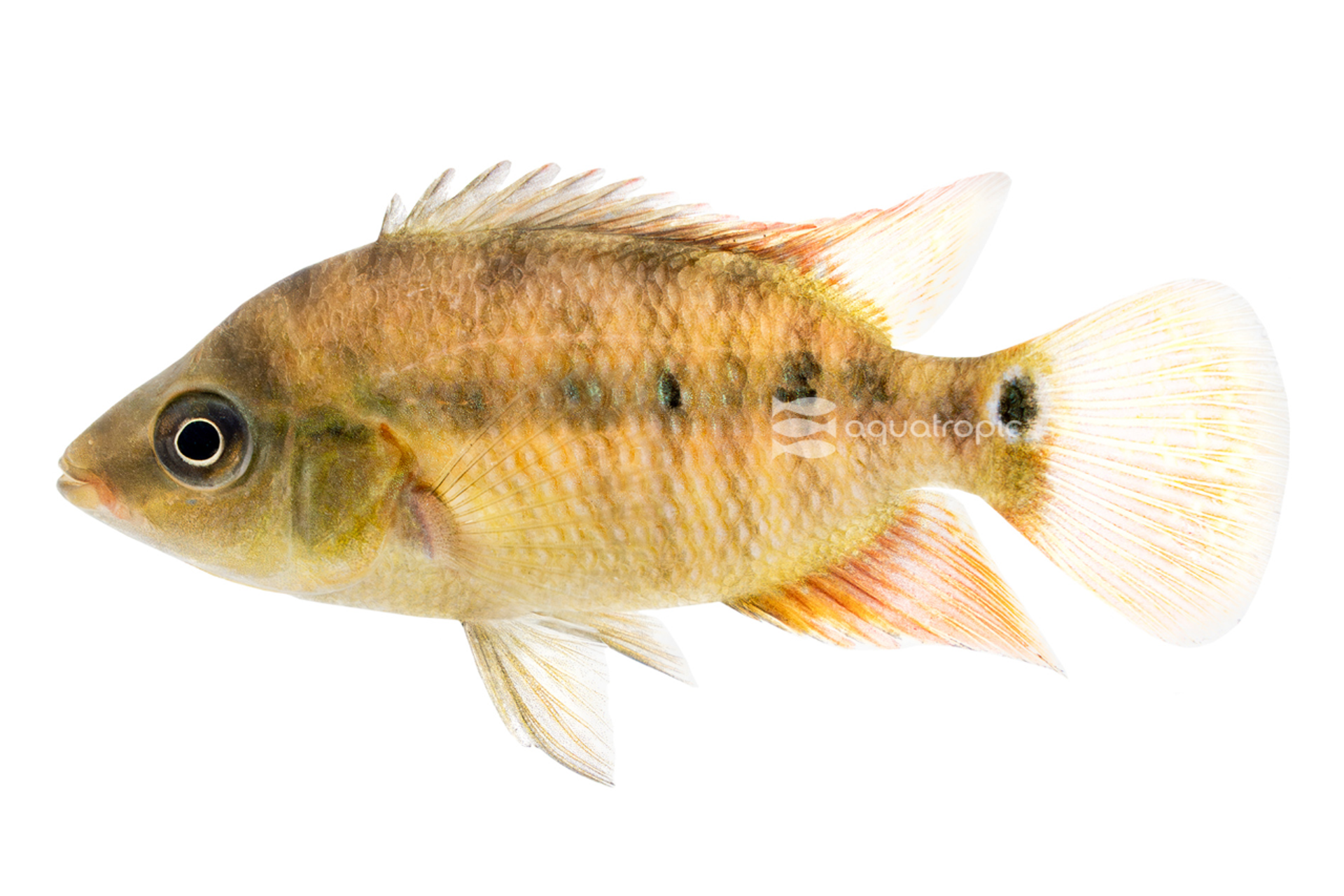
Common names frequently offer a lot of useful information, and such is the case for the fish that goes by the scientific moniker Mesoheros festae. You may also see it as Cichlasoma festae, which is not correct anymore, but it's the same fish. It has several common names, but the most frequently used of them are Festae Rio Esmeralda Cichlid, Guayas Cichlid, and very appropriately, the Red Terror Cichlid. The first two common names relate to the river systems these fish are native to in Ecuador.
It got that last name through its behavior. Festae Cichlids are territorial, especially while spawning, and can be downright aggressive. They will be intolerant of most all fish during spawning, which can happen pretty frequently. Aquarists who breed Festae Cichlids will often construct cover that is too small for the male to get into, and just large enough for the female to enter so she can hide from him to protect her during his aggressive post spawn behavior!
Some of you are asking why someone would keep such a fish, and the reason is that they are gorgeous and intelligent wet pets. At maturity, they'll be somewhere between shimmering gold and a deep red or flame orange with black vertical stripes running along their sides and covered with small iridescent spots. The other reason is that they are allegedly delicious and a common food fish in Ecuador. Mesoheros festae can get fairly big, males can approach nearly 18 inches long, with females being substantially smaller at maturity, more in the 10-12 inch range. They reach sexual maturity around 10 inches long and will grow slowly after that. This still means a pretty big tank, and a pair could be kept in a 125 if it offered plenty of cover in the way of rocks and driftwood, both well fastened down as the Festae Cichlids like to do some re-decorating. Plants will not make it unless they are floating or well attached to décor. Flow isn't a big deal, but you'll want strong filtration to help keep up with the waste load of such a large fish. Substrate isn't strictly required, but if you include some, these cichlids will dig pits in it to rear their babies.
Water chemistry for Festaes is pretty straightforward. They aren't picky about hardness and pH should be neutral to barely acidic (6.0-7.0). They do like a pretty warm aquarium so keep temps between 76 and 84. These are very hardy fish, and will be fine with some nutrient load, but like all fish, they'll be happier and healthier (and more likely to spawn) in clean water, so keep up the big water changes and filter maintenance to try and keep nitrates under 20ppm.
So, what do you keep such a brute of a fish with? Well, if you want to get a pair, you'll need to start with a group of Festae Cichlids. They're impossible to sex when they are juvenile so start with at least six and up to a dozen. Out of this, one or more pairs should form, and they can be separated into their own aquarium. If you want to keep just one, in a tank with other fish, this is also possible, but they'll need to be of the same temperament and size, think things like Peacock Bass, Jack Dempseys and Texas Cichlids etc. Keep in mind that smaller fish might also be eaten outright.
For those of you who do want to try and breed them, it shouldn't be too challenging, other than managing the aggression. Once mature and well fed, the female will lay eggs (sometimes thousands) in a cave, and the eggs will hatch four or five days later and free swimming a week after that. The fry will then be herded into one of the “pits” that the adults made and guarded ferociously for couple weeks longer. The biggest problem is their aggression. The males will sometimes even push the females out when guarding the fry, so she may need a place to hide during this period.
They are all easy to feed and happily take down Nutramar Freshwater Complete Pellets. We also give them a mix of meaty foods like Gamma Brine Plus Omega, Brine Plus Spirulina, Bloodworms etc. You can also feed them live food like red worms, meal worms, and earthworms, especially as they get larger. They'll eat feeder fish too, but those should only be acquired from a trusted source, and be gut loaded to offer better nutrition.
Do you like large gorgeous fish? Are you undeterred by territorial or aggressive fish? Do you have a large enough aquarium to keep a 15-inch brute happy? If so, ask your LFS about getting you a Festae Rio Esmeralda Cichlid or even a small group of them from Aquatropic today!