Arbiliniata - The Decorative Angelicus
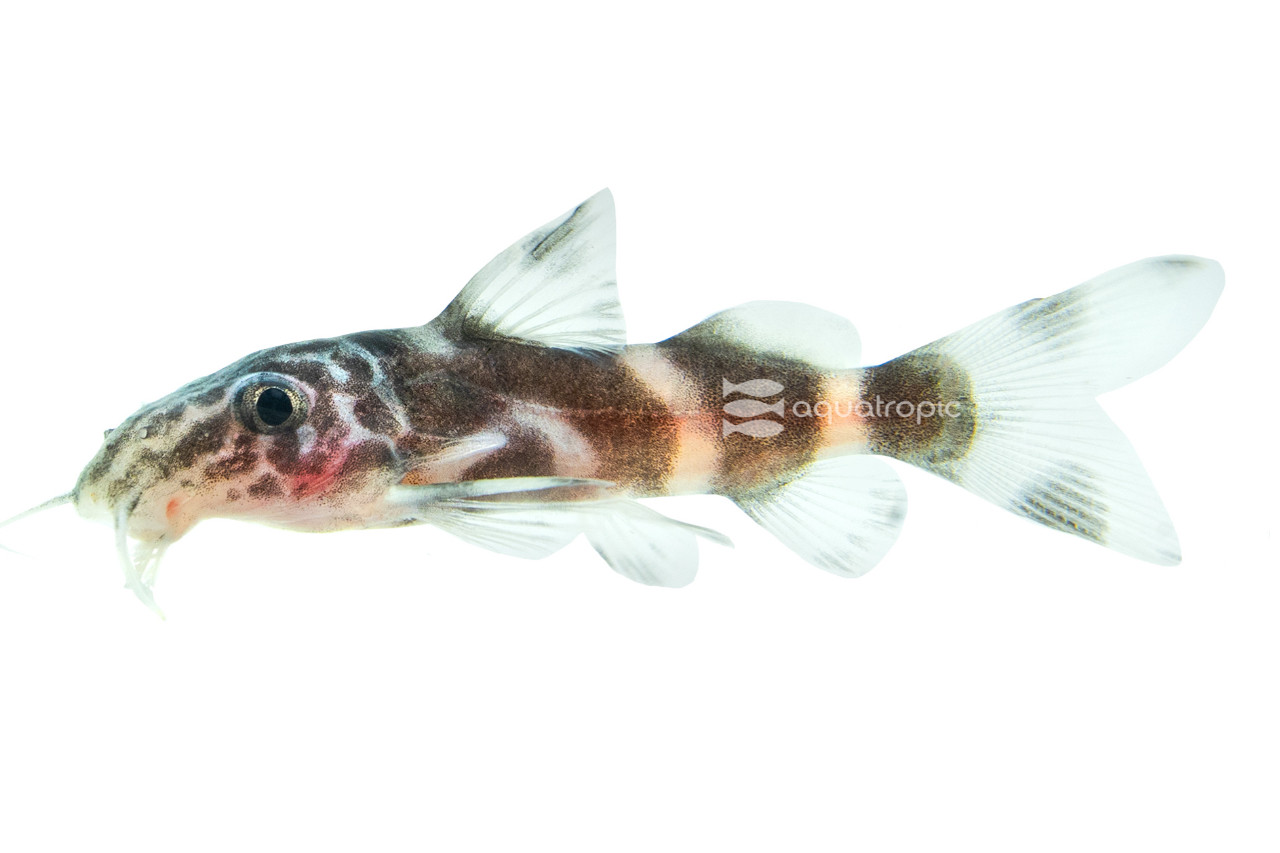
When two of the most visually striking members of the genus Synodontis are crossed, the result is something that reliably stops aquarists in their tracks. The Synodontis angelicus x decorus hybrid, (usually called the Arbiliniata Synodontis) combines the vivid polka-dot patterning of the Polkadot Syno with the bold filamentous dorsal extension and clean body shape of the Clown Syno. The fish that emerges from that pairing is, in our opinion, one of the most handsome catfish available in the freshwater aquarium hobby today.
Arbiliniatas are captive-produced hybrids. Synodontis angelicus (one of its parent species) originates from the Congo River basin in Central Africa, where it inhabits fast-moving waters with rocky substrates and significant dissolved oxygen. They're one of the larger Syno's commonly seen in the aquarium hobby, and also one of the more territorial. Synodontis decorus (the other parent) also comes from a similarly broad distribution across the Congo basin and associated river systems. It's known for the elongated filament that extends from the tip of its dorsal fin. They are also one of the larger Synos but are generally quite peaceful. Both parents are members of the family Mochokidae, the squeaker catfish, a group named for the audible sounds these fish produce by stridulation (yup, that's a word, not a misspelling, google it) when removed from the water or startled. The hybrid inherited this behavior as well.
The Arbiliniata Synos will grow to somewhere in the range of eight to ten inches long by adulthood; not a small fish. Its base coloration leans toward the cream and tan tones of the decorus parent, but the dark spots inherited from angelicus appear prominently across the body and into the fins. Many specimens also carry the (often dramatically long) dorsal fin filament.
Arbiliniata are active and not diminutive, so a minimum of a 75 gallon tank should be considered for a single specimen, and a 125-gallon or larger system becomes appropriate if you intend to keep more than one, (they do well in groups if given enough space) or if you plan to house the fish with large companions that will be competing for the same floor space. When keeping Synos, cover is king. They always want a place to hide and be sheltered from the light. You always want more caves than fish and the caves need to be large enough to fully enter (and get out of). Driftwood, rocks, even PVC pipes (or half pipes) can all work perfectly. You'll see much less aggression between them if there isn't competition for hiding places. In regard to substrate, fine sand is the ideal choice because it allows the Synos to use their barbels; these fish probe the substrate looking for food, and coarse gravel can physically damage them.
Both the parent synos of this hybrid come from Central African river systems that are well oxygenated. The hybrid will also like these conditions. Temp could be anywhere between 75 and 82, pH between 6.5 and 7.5 and water hardness is largely irrelevant as long as you avoid extremes. They do like water to be clean and well oxygenated. Keep up the water changes, use strong filtration and get some water movement going and you'll see your fish being as healthy and active as possible.
Feeding Synos is always pretty easy, and the Arbiliniata being a captive born and raised critter is even easier than usual. They're omnivores with a penchant for some meaty food, and especially as juveniles will appreciate some extra protein in their diet. We feed them Nutramar Shots in the Freshwater Algae and Color Boost formula, which is basically made for them. Good protein levels, plenty of algae content, excellent nutritional profile, and the shots get stuck to rocks or glass and the Syno can eat it in the way their mouthparts have evolved for. They'll also happily take sinking pellets as long as some get down to them past the fish that feed higher in the water column. We supplement this food with a mix of Gamma Thawed stuff like Bloodworms, Chopped Fish, Chopped Prawn, and Chopped Mussel etc. They'll also really love live redworms or earthworms if you have a clean source for them (raising worms is pretty easy, but a totally different article.) It also doesn't hurt to get your fish some vegetation to eat, like zucchini rounds, or blanched spinach etc, especially if you aren't feeding the Algae and Color Boost Shots. Your fish will like to be fed when the lights go out, or just before they come on. They love living in that dawn / dusk lighting, and this helps them get more food as some of your other fish will be headed to bed at those times.
On the topic of other fish, Arbiliniatas are generally pretty peaceful fish given enough food, space and hiding places. They're a fish best kept as a single specimen unless you can keep five or six, and each one of those fish will need at least one cave to hide in and a couple extra hidey-holes would be ideal. Two Arbiliniata Synodontis kept in a tank that does not provide enough distinct territories will squabble, and while the interactions are rarely injurious, they certainly could be. The low-level squabbling creates a chronic stress that can affect your fish and your mood too. Other appropriate fish that aren't Synos would be the more peaceful African Cichlids, Large African Tetras and Barbs would all make for a killer display (though your hybrid would be the least genuine portion of this, it would still be one of the coolest fish in there). You could also keep them with Gouramis, Rainbowfish and any other fish that is big enough not to get eaten and likes the current (and water chemistry) that the Syno prefers.
The behavior of a settled, well-fed Arbiliniata is genuinely entertaining. These fish will patrol the lower portions of the tank in the evenings with deliberate confidence, probing every corner with their barbels and investigating any new decoration or food source with evident curiosity. Some individuals develop a habit of resting upside down under a piece of driftwood or in the roof of a cave — a behavior inherited from the Synodontis tendency toward inverted swimming, most common in juveniles but occasionally you'll see adult specimens still doing this. If you think the bottom of your aquarium has lacked a centerpiece, then perhaps you've found the right article at the right time. Think about these gorgeous and interesting hybrid Synos till fill just that role. Ask your Local Fish Store about getting you a (or maybe a group of) Arbiliniata Syno(s) today. Tell them Aquatropic sent you.